

The Vienna negotiations to revive the July 2015 Iran nuclear agreement—the Joint Comprehensive Plan of Action, or JCPOA—are once again in danger of fizzling out. Tehran and Washington, along with fellow signatories Britain, France, Germany, …

The Vienna negotiations to revive the July 2015 Iran nuclear agreement—the Joint Comprehensive Plan of Action, or JCPOA—are once again in danger of fizzling out. Tehran and Washington, along with fellow signatories Britain, France, Germany, …
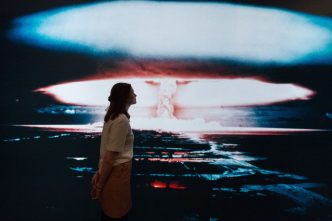
Russia’s invasion of Ukraine and nuclear sabre rattling against the West have revived a debate about nuclear weapons. Last year, when a United Nations treaty to ban such weapons outright entered into force, none of …
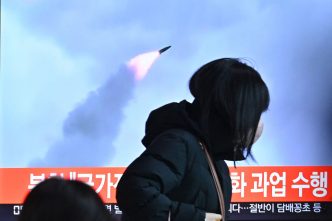
Sixty-nine years ago, an armistice ended three years of fighting involving the United States, China, South Korea and North Korea. In a speech marking the anniversary, North Korea’s supreme leader, Kim Jong-un, threatened to use …
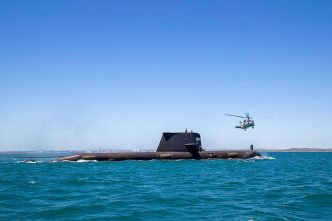
The government has announced a defence strategic review to ensure Australia ‘has the right capabilities that are postured to meet the growing strategic challenges that Australia and its partner countries will face in the world …
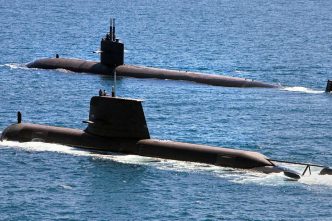
In a previous piece, we examined the broad schedule of Australia’s capability transition from conventional submarines to nuclear-powered submarines (SSNs). In planning the transition, we shouldn’t just be focusing on the point when the first …
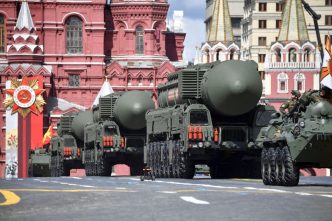
Russia’s invasion of Ukraine, it’s fair to say, has already profoundly shaped the global discourse on nuclear weapons. In the deliberations at the inaugural meeting of the states parties of the Treaty on the Prohibition …
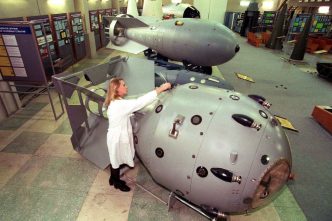
When the Soviet Union collapsed in 1991, Ukraine inherited part of its nuclear arsenal. But in the 1994 Budapest memorandum, Ukraine agreed to return these weapons to Russia in exchange for ‘assurances’ from Russia, the …
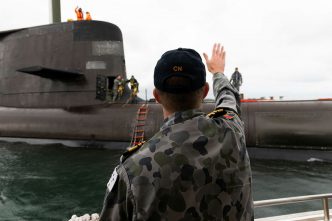
In our most recent article, we argued that the Australian government should widen the aperture of the lens through which it is scrutinising industrial strategies for acquiring and sustaining Australia’s nuclear-powered attack submarine (SSN) capability. …
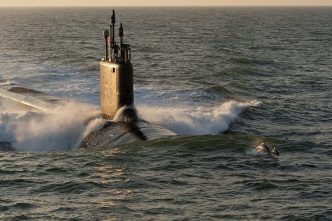
In our previous post, we considered the likelihood of the US providing Australia with Virginia-class submarines this decade. Doing so would require the US Navy to give up two of its nuclear-powered attack submarines (SSNs) …

In March, not long after Russia’s invasion of Ukraine began, claims from the Kremlin of a US-funded bioweapon program in Ukraine flooded global media. Those reports were amplified by China and picked up by conservative …
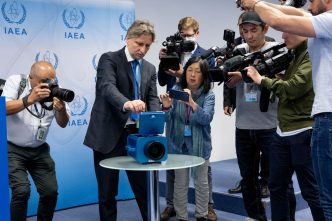
The International Atomic Energy Agency’s 8 June motion to censure Iran for not disclosing three decades-old former secret nuclear sites, and Tehran’s response of removing multiple IAEA cameras that monitor Iranian uranium enrichment levels, doesn’t …
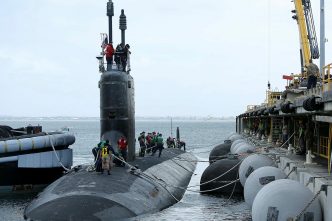
In 2009, Kevin Rudd’s government decided to increase Australia’s submarine capability. It wrote in its defence white paper: ‘The Government will increase the size of the submarine force from six to 12 boats. The doubling …