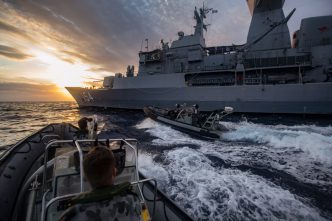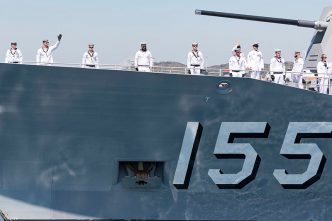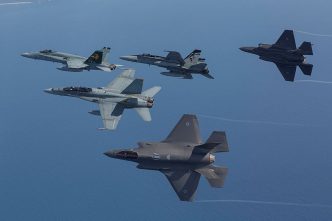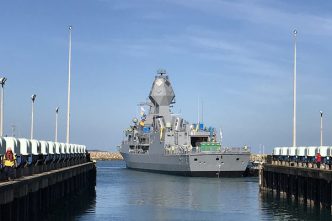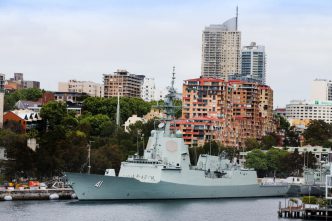

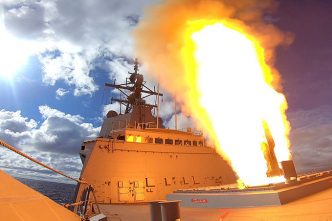
The Royal Australian Navy has neglected long-range naval surface-warfare capability for too long. Its new Hobart-class air warfare destroyers represent Australia’s most advanced naval combatant introduced into operational service, but their main anti-ship and land-attack …
One of the pearls in my memory of working in a big bureaucracy showed how things that make sense inside it simply don’t in the outside world. It’s a corrosive dynamic that applies to how …
In response to Australia’s increasingly uncertain strategic outlook, there are now calls to boost defence spending well beyond the current target of 2% of GDP in what’s assumed to be a steadily growing economy. Taxpayer …
In part 1, I discussed how the Anzac class of frigates is only halfway through its service life and the last of the class now needs to remain in service until 2042–43 as the new …
The Defence budget continues to deliver as expected. As forecast last year, there will be a modest increase in 2019–20 of around 1.2% in real terms, to $38,742 million (including both the Department of Defence …
Moving from the Collins-class submarines to the Attack class is not the only long and complex capability transition that the Royal Australian Navy is embarking upon. The journey from the current Anzac-class frigates to the …
In past conflicts, many hours, days or weeks were spent gathering and analysing intelligence before an attack was launched on an enemy. Advances in science and technology have brought that time down to minutes, and …
At first blush, the central narrative of the Defence Department’s 2018–19 budget, as presented in the Portfolio Additional Estimates Statements (PAES), appears to be about the falling Australian dollar. Defence’s estimated appropriation for 2018–19 has …
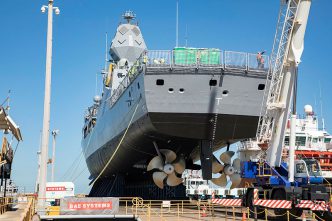
This is an exciting time for Australian naval shipbuilding. Two patrol vessel programs are underway, the Anzac-class frigate midlife capability assurance program (AMCAP) is completing the first of eight ships, and Hunter-class future frigates are …
My previous post looked at the greater value for money Australia will derive from the program of continuous warship design and construction it is commencing compared with the stop–start method of the past. This part …
The Australian Defence Force’s equipment is good and getting better. But the ADF’s current and planned force structures have some significant limitations in their ability to deliver some crucial military effects. In an era of …
In the midst of the discussion about the Royal Australian Navy’s future frigate and submarine programs, it’s important to acknowledge the significance of their continuous nature and to remember that they have design and building …