
Articles by " Mark Thomson"

The Defence White Paper—between the lines

14 May 2013

Chinese People's Liberation Army officers with the Beijing Military Region speak with U.S. Marine Corps Staff Sgt. Travis W. Hawthorne, right, about the M4 carbine during the 2012 Australian Army Skill at Arms Meeting (AASAM) in Puckapunyal, Australia, May 12, 2012. Over the past year, low-level but concerning brinkmanship has continued in the Asia Pacific, with China maintaining the pattern of provocation that emerged following the 2008 global financial crisis. As Ross Terrill put it recently, ‘China is probing on multiple fronts for more space and clout, sustaining quarrels with numerous neighbours who are Australia’s friends’.

Oh wait, that doesn’t sound right. What does the new Defence White Paper say about all this? Let me see… ok, I think I understand. Let me try again.

Over the past year, competing territorial claims in maritime Asia have remained unresolved. This is concerning because these flashpoints increase the risk of both ‘destabilising strategic competition’ and ‘miscalculation’. ‘Australia has interests in the peaceful resolution of territorial and maritime disputes including in the South China Sea in accordance with international law…’ ‘Events in the South China Sea may well reflect how a rising China and its neighbours manage their relationships’. Read more

That’s much better. Everything is 100% accurate, but no one’s feelings are hurt. Bad things might happen, but it will be no one’s fault. Better still, we assign ourselves the role of a concerned but seemingly uncommitted observer. It’s as if we’re having a strategic out-of-body experience. That’s the genius of the 2013 Defence White Paper.

Nowhere is this truer than in its repeated focus on the ‘US-China relationship’ rather than on the more usual preoccupation with ‘the rise of China’. Indeed, the chapter on Australia’s strategic environment has a section called ‘The United States and China’ which discusses the two countries jointly rather than separately. In comparison, the 2009 effort was so crass as to have separate sections entitled ‘US Strategic Primacy’ and ‘The Strategic Implications of the Rise of China’.

Apart from a couple of dissenting voices who see the changed tone as kowtowing to Beijing, the new approach has been broadly heralded as more nuanced and sophisticated than its predecessor.  That might be true, and it might even be more self-consistent, but there’s no denying that it’s also both less frank and less complete. The fact is that, no matter how the document was drafted, it was always going to be a compromise between incompatible outcomes.

In a sense, it probably doesn’t matter, just as the ‘Indo-Pacific’ verses ‘Asia-Pacific’ debate is of little consequence beyond academic circles. Although a generation of students will now be subjected to ‘compare and contrast’ essay questions on the issue, the observed reality is that government’s plans for the ADF have changed very little.

To the extent there’s a causal link between the strategic theology of the initial chapters of the White Paper and the wish list of equipment projects further in, the changed description of our strategic landscape hasn’t made one iota of difference. Of course, that could be explained by duplicity of our part; we tell China what they want to hear, while we quietly draw closer to the United States.  And make no mistake; we have drawn closer to the United States in the four years since the 2009 White Paper.

Of course, the Chinese aren’t falling for any of this. They know that we’re welded to the United States through the alliance, and that our history, values and interests will keep it that way. They also know that we’re hedging—along with others in the region—against the possibility that they’ll use their growing power at the expense of others. They even have a word for this; they call it containment. They also know that our newly found love of regional engagement is all about winning over the half billion souls that live between us and China over to our way of thinking. But the 2013 White Paper leaves sufficient room between what they know, and what we say, to avoid giving them offence. Face has been saved.

Duplicity is nothing new in world of diplomacy. Since at least the 1970s there’s been a streak of disingenuousness in Australian defence rhetoric. The Defence of Australia doctrine was conceived as a replacement to ‘forward defence’ in the bitter years after Vietnam. Not surprisingly, it was a policy that justified retaining a moderate size defence force while limiting our liability to be drawn into future US follies. Up to a point, it was our get-out-of-jail-free-ticket for the Cold War. By focusing on the defence of our continent, notwithstanding the absence of any plausible threat, we could limit expectations of what we were prepared to do elsewhere.

Yet at the same time, we simply rolled on with the force structure from the days of forward defence. We even retained an aircraft carrier until it became too expensive. And, just as we do today, we worked hard to maintain interoperability with the United States and pursued cooperation with them at multiple levels. Critically, we did so not just because we wanted to be able to call on US assistance if something went wrong—though that’s always been important—but also because we knew that the United States underpinned the geopolitical strata upon which our security depends. In reality, irrespective of the careful wording of our policy, there was never much doubt that we’d ‘act to meet the common danger’ as required in article IV of the ANZUS treaty (PDF) if the strategic balance in the Pacific was threatened.

Much has changed between the first codification of the defence of Australia doctrine in 1976 and today. Yet, even though the policy has evolved to be more outwards looking in response to changing circumstances (though mostly as a result of lessens learnt than foresight), the core priority on our own defence remains intact. And what a bloody useful thing it is to have.

To start with, it allows us to set the upper limit of scale of our defence effort at a relatively low level, given the continuing absence of a serious contender to threaten our sovereignty. At the same time, it positions us well to determine the scale of what we contribute to coalition missions such as those in Iraq and Afghanistan. Moreover, because the wording used to describe the self-reliant Defence of Australia was largely plagiarised from Nixon’s July 1969 ‘Guam doctrine’, it’s hard for the United States to object. For these reasons, Defence of Australia remains the policy of choice for free riding.

Perhaps more important for us today, Defence of Australia allows us to adopt the sort of third party once removed rhetorical position employed so cleverly in the 2013 Defence White Paper. Imagine how the White Paper would have read if it had begun with the recognition—brutal yet surely accurate—that our security ultimately depends on the geopolitical balance in our part of the world rather than on our ability to defend the continent against attack.

Duplicity requires careful handling. Not because we might be found out—we’re so far down the ‘they know that we know that they know’ route that there’s nothing to hide. Rather, we need to be careful not to delude ourselves. It would be alarming if our response to the Asia-Pacific century (oops, Indo-Pacific Asian century) was to be to refocus our limited resources on operating aircraft out of bare bases and conducting Kangaroo exercises to hunt for raiding parties in our remote north. God help us if we start to believe our own rhetoric.

Mark Thomson is senior analyst for defence economics at ASPI. Image courtesy of Wikimedia Commons.

All at sea

8 May 2013

There was a time back in the 1990s when the Defence Annual Report listed not just the availability of the Navy’s various platforms for deployment, but also the actual number of days at sea for each of its vessel types over the year. We were told both what each fleet could do and what they did do.

By the turn of the century, the Navy had ceased to report sea days and we were left with only the (more flattering) number of days vessels of each type were available for tasking. Nonetheless, reporting during this period was sufficient to expose problems with the various platforms due to upgrades, maintenance issues and delayed replacements.

Then, in 2009–10, Navy ceased reporting at the vessel type level and aggregated together the availability of its key vessels into three categories:

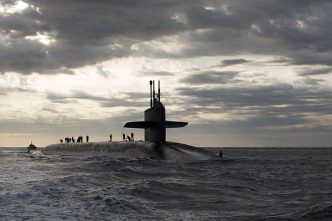
Major Combatants: Anzac frigates, FFG frigates and submarines.

Minor Combatants: Patrol boats, auxiliary minehunters and coastal minehunters.

Amphibious and Afloat Support: oil tanker, replenishment ship, landing ship dock, heavy landing ship and heavy landing craft. Read more

The reason for this much reduced transparency is supposedly security related. I’m doubtful: if we were able to report the availability and sea days of our submarines when they were undertaking risky intelligence gathering missions, why can’t we know their availability today? Similarly, why is the availability of our frigates a national secret when the RAAF freely reports the number of flying hours achieved by its frontline fighters? If security really is the reason, as opposed to just wanting to avoid scrutiny, Andrew Davies’ revelations about Collins availability show that it’s not being implemented with much success.

But even using aggregate data the results aren’t encouraging, as the following three graphs show (click to enlarge). The targets for each category are as set in the budget for that year, and the actual figures are as reported in the Annual Report. While the best-fit line for the minor war vessels is of questionable meaning, the results for the other two categories are pretty clear about the trend.

Mark Thomson is senior analyst for defence economics at ASPI.

Where’s the Beef?

3 May 2013

Mark Thomson,senior analyst for defence economics at ASPI.Back in the day, you could get a free Big Mac from McDonalds by reciting  ‘…two all beef patties, special sauce, lettuce, cheese, pickles, onions on a sesame seed bun…’ in less than 5 seconds (limit one per customer per day). As a hungry teenager I made it my mission to master the art.

My summer of eating for free was a spin off of the Burger Wars of the late 1970s and 80s between the large hamburger chains in the United States. Over that period, millions of dollars was spent on television advertising by McDonalds, Burger King, Hardee’s and others to entice customers to the drive-through window. The most lasting legacy of the era has been the ‘Where’s the Beef?’ campaign from Wendy’s (which was revived in 2011). Take a moment now to watch the original advertisement and one of its follow-ups. It’s hard not to laugh even today.

I was reminded of the classic Wendy’s campaign today as I was reading the new Defence White Paper. Not because it’s entirely lacking in nourishment for the ADF—twelve Growlers is a substantial addition to the force structure. And there’s even a promise of some additional money over the next four years, not just for the Growler purchase but also to address budget pressures within Defence. My concern is for the longer term, when we’ll have to pay to maintain a mixed fleet of Super Hornets and F-35 Joint Strike Fighter while building twelve new bespoke submarines at great cost and risk, not to mention maintaining today’s troop numbers and enhancing ADF base infrastructure across the length and breadth of the country. None of this will come cheap. Read more

We’ll get more details on funding in the Budget next week, with expenditure guidance out a decade promised. This is a positive step, but we’ll have to look closely to see if there is sufficient money allocated to do all that has been promised today. It’s only then that we’ll be able to lift the bun of the burger and see how much beef there really is.

Even if there’s a hearty chunk of bovine protein sitting amid the tomato sauce, there’s the question of what comes next? It’s unrealistic (and clearly pointless) to ask the government to commit to defence spending so far into the future. As we’ve seen over the past four years, governments can and will change their mind as events intervene. That’s okay, we need them to do just that. Nonetheless, we should also expect that due regard is paid to the compatibility of today’s plans with longer-term economic expectations. There’s little point investing billions of dollars in military equipment if we cannot be sure of being able to afford to operate it in the future.

On this count, we must be concerned. The unexpected collapse of this year’s surplus heralded the emergence of a long-term structure deficit of unknown dimensions. Unfortunately, we will not be getting an Intergenerational Report this year so we don’t know how realistic it is to aspire to spend 2% of GDP on defence, or how long it might take us to get there, or indeed how much money might amount to in the years ahead.

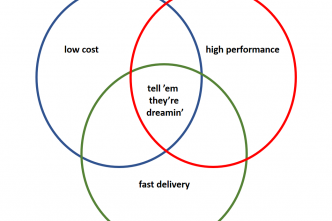
It’s not the case that if we say ‘three air warfare destroyers, special forces, tanks, planes, rifles, bombs and lots of regional engagement’ fast enough that we’ll get it all for free.

Mark Thomson is senior analyst for defence economics at ASPI.

We don’t have to choose between the US and China

2 May 2013
Posted in: General By

PM Gillard meets with HE Mr Li Keqiang, Premier of the People’s Republic of China. Ministers Carr, Emerson and Shorten were there. Ceremonial welcome and Witnesses Signing Ceremony . Great Hall of the People, Beijing , Prime Minister Gillard, Overseas visit to China 9 April 2013

What will the new White Paper say about China? More precisely, what will it say about the emerging strategic contest between China and the United States and its consequences for Australia?

Many observers, myself included, believe that we’re headed for an even closer alliance between Australia and the United States as a result. Others aren’t so sure, arguing instead that we’ll be forced to choose between our economic relations with China and our strategic relations with the United States in what amounts to a zero-sum game.

There’s no denying that escalating competition between China and the United States carries risks. A breakdown in relations between those two countries would carry serious consequences, and an outright conflagration would be grave for all concerned. But it’s a logical error of the first order (and a rhetorical trick of the lowest order) to conflate the dire consequences of outright war with the supposed incompatibility of having workable relations with both China and the United States in peacetime. Read more

I’ve written at length elsewhere on why this is so; suffice to say there are two key arguments. First, given that China and the United States have an even closer economic interdependence than Australia and China, it’s hard to make a plausible argument that our strategic relationship with the United States is somehow incompatible with our economic relationship with China.

Second, the predominance of commodities in our trade with China provides few if any channels for the Middle Kingdom to coerce us economically. China isn’t buying our commodities because they want to be our best friend, or as part of a cunning plan to drive a wedge between us and the United States. Rather, they buy from us because we’re an efficient and reliable supplier. It’s a global market and we are a class act by international standards. Put simply, China doesn’t buy our commodities, someone else will. Moreover, any attempt by China to punish Australia for its alliance with the United States by cancelling trade would severely damage their reputation as a reliable customer and force future suppliers to demand a sovereign risk premium.

Recent work by Shiro Armstrong at the ANU only strengthens the case. In his 2012 study of the China–Japan relationship—a relationship marked by deep mistrust and periodic heightened tensions—he concluded that ‘trade has not been diminished or disturbed by politics to a significant extent’. If Japan can enjoy growing trade with China while maintaining its alliance with the United States (and despite long-standing historical animosities dating back to the 1930s), surely Australia can do likewise.

That argument can be extended to South Korea, Singapore, Vietnam, Taiwan and a host of other regional countries that have close economic ties with China and a strategic relationship with the United States. There’s little sign that they’re pulled apart by irreconcilable interests, so why should we think that Australia is—surely our lack of proximity to China should make us less rather than more sensitive to China’s prerogatives?

Nonetheless, the narrative that Australia has to choose between China and the United States has gained considerable traction in the media in recent years. It’s become a mantra to be repeated in every news story about Australian foreign policy. At the heart of the story is the notion that Australia is economically beholden to China—a perception that China is happy to encourage.

The risk of thinking that Beijing has an economic leash around Canberra’s neck is that it will become a self-fulfilling prophecy, whereby perceived economic dependence lead to actual political deference. If offending Chinese sensibilities is taken as synonymous with damaging our economic interests, our leaders will be hamstrung in what they can say and do.

I fear that this possibility may already be upon us. The carefully circumscribed (ie manifestly incomplete) discussion of China’s rise in the government’s Asian Century White Paper is indicative of just such a malaise starting to take hold. But perhaps that was simply a reflection of the economic focus of that document. In any case, the forthcoming Defence White Paper will be an important test in this regard.

Make no mistake; nobody in the defence business—inside or outside of government—thinks that there’s any more important challenge facing regional and global security than the rise of China. Academics know it, journalists know it, your mother knows it, and every serviceman and servicewoman in the defence force knows it. If the Defence White Paper ignores the proverbial elephant in the room and avoids talking plainly about China, it won’t only be a failure to face reality, it will also be a dismal sign of our lack of confidence as a nation.

Mark Thomson is senior analyst for defence economics at ASPI. Image courtesy of Flickr user Julia Gillard.

Economists and strategists

29 Apr 2013
Posted in: General By

A couple of weeks back, ASPI hosted a half-day meeting between economists and strategists. The goal was to explore how the two groups can cooperate in a public policy sense. It turned out to be a lively and interesting afternoon. As a scene setter, I spoke on what I saw as the similarities and difference between the two disciplines and also on the opportunities for collaboration. This post is a summary of what I said.

The core goal of public policy is very simple; we desire more good things and less bad things. Economists and strategists largely sit on opposite sides of this dichotomy. Economists seek to arrange society so that we can have more good things than would otherwise be the case. In contrast, strategists try to mitigate the risk of a particularly nasty class of bad things by reducing their likelihood and consequence.

The demarcation isn’t absolute. Economists worry a lot about economic stability (which is about avoiding bad things) and strategists take regard of the advantageous spin-offs from defence investment (which is about having more good things). Notwithstanding such exceptions, economists are mostly concerned with making the world a better place while strategists want to stop it from becoming a worse place.

Economics and strategy (in the form of strategic studies and the like) are both well established in our universities. But, while both fields produce credentialed experts at a rapid pace, it’s only in economics that formal training really counts for something. While it would be extraordinary for a non-economist to head the Reserve Bank or Federal Treasury, it’s routine for strategy to be practised by people with little or no formal academic background in the field. When was the last time a Secretary of the Department of Defence (or a Chief of the Defence Force) had an academic qualification in strategy? Read more

There’s a reason economics is a full-blown profession while strategy remains a game for amateurs. The technical aspects of economics constitute a barrier to entry which isn’t easily crossed without formal training. If you don’t know the difference between the Phillips Curve and a Phillips head screwdriver, you’ll be found out pretty quickly. In strategy, most educated folks with an interest in the world can hold their own in a discussion over, say, the value of the ANZUS alliance to Australia.

Part of the reason why the barriers to entry for strategists is low is that they long ago outsourced most technical matters (of which there are a great many in defence and strategic affairs) to a subordinate cadre of tame scientists, technologists and intelligence specialists who ‘worry about the details’. In contrast, economists are intimately involved in the details of what they do. The reason might be that economists have mountains of data to play with, whereas on the big issues strategists ultimately have to rely on little more than a handful of historical anecdotes.

The large disparity in the availability of data shapes the nature of the respective theories that economists and strategists develop. A lot, but by no means all, of economic theory is mathematically based and amenable to falsification in principle—though it sometimes turns out to be often surprisingly difficult to draw definitive conclusions in practice. As for strategists, to the extent that they have theories, they’re more akin to ideologies; plausible but largely untestable presumptions about how countries behave in the international community.

So what about the similarities? To start with, economists and strategists share all the frailties of being human, including, critically, a limited capacity for objective judgement. In each field, people coalesce into mutually reinforcing sub-groups with a particular worldview. Students adopt the prejudices of their supervisors to perpetuate ‘schools’ of thought. As such, the outputs of both fields owe as much to social context as objective analysis. Neither area of study can claim the high ground on this count. In 2007 there were at least as many economists who believed that the business cycle had been tamed into a ‘great moderation’, as there were strategists who believed that Iraq was bristling with weapons of mass destruction in 2002.

At some level, both fields try to make predictions about the future and offer policy prescriptions about what to do. All the standard jokes about economists having an almost unlimited diversity of views hold equally if you substitute ‘strategist’ for ‘economist’. And both fields have their share of shills promoting the views of vested interests. More importantly, there’s little evidence that commentators in either field are any more prescient than thoughtful non-specialist observers. If that sounds doubtful, check out the work by Philip Tetlock on the matter.

To be fair, both fields deal with very difficult and often complex problems. It’s disappointing, but ultimately not surprising, that our best experts more often than not fail to foresee monumental developments such as the fall of the Soviet Union and the Global Financial Crisis. At the heart of the problem of prediction lies the uncertain dynamics of individual and aggregate human behaviour. We have no better idea what Kim Jong Un will do tomorrow than we have of where the equity markets will close in a week’s time—and there’s nothing we can do about it.

The final point about the two disciplines is a positive one. When all’s said and done, both fields have made an overwhelmingly positive difference to the world in the post-WWII period. Two things stand out. A generation of strategists managed to avoid war with the Soviets and lived to see that version of authoritarianism related to the dustbin of history. At the same time, economic growth spread across the globe, raising living standards and boosting life expectancy to unprecedented levels—a tribute to the economist’s prescription for freer domestic and international markets. On the big stuff, we got it right. And although the two disciplines largely worked in separate silos to achieve these results, there’s no denying that their positive outcomes were mutually reinforcing. Peace is good for prosperity, and prosperity is good for peace.

Looking to the future, it’s become pro forma to assert that the world is becoming ever more complex, interconnected and uncertain so that we must break down the silos and adopt a multi-disciplinary, whole of government, holistic, integrated… etc. I think such claims overstate the problem. They also betray an ignorance of history; the current series of financial ‘crises’ in Europe pales into insignificance compared with what happened in the 1920s and 30s in that same part of the world.

Yet, I believe that there are some issues upon which strategists and economists might usefully engage. Here are a few possibilities:

  • Managing international finance during a strategic crisis. Given the massive foreign holdings of US and European debt, what consequences might there be in the event of a strategic crisis?
  • Resource and energy security. It’s impossible to properly understand resource or energy security without an appreciation of how global markets operate.
  • Trade policy and geopolitics. The barely concealed strategic competition between China and the United States is a relevant factor in understanding the competing trade liberalisation agenda being pushed in the Asia Pacific.
  • Defence efficiency. Recent attempts to reform the Department of Defence have been led by strategists, generalists and managerialists, with minimal input from economists. The results speak for themselves.
  • Monetary policy and geopolitics. One country’s attempt to stimulate economic growth through ‘quantitative easing’ has a potentially unwelcome impact on the terms of trade of others, and thereby on its international relations.

Mark Thomson is senior analyst for defence economics at ASPI.

There’s no perfect measure for defence spending

23 Apr 2013

In a recent post, Neil James made some interesting points about defence spending metrics and the political economy of defence in a democracy. With the federal budget due in three weeks’ time, I thought I might add some observations of my own on how to measure defence spending. A response to Neil’s provocative points on the politics of defence funding will have to wait for another day.

There are four measures of defence spending in common use: dollars, growth rate, percentage of GDP and percentage of government outlays, each of which gives useful and complementary information about the financial aspects of a country’s defence effort.

The most direct measure of a country’s defence spending is what it spends measured in its own currency. But it is also the measure most beset by complications. Comparisons of defence spending within a country over time are made difficult by inflation. Although it’s routine to talk about ‘real’ dollar figures adjusted for inflation, there’s actually no unique way of doing so. What’s more, the steady introduction of new products into the economy reduces the meaningfulness of comparing the ‘value of money’ over very long time periods, even within a consistently applied methodology. Read more

Comparisons of defence spending between countries are even more fraught, buffeted as they are by ever-fluctuating exchange rates. Even within a single year, exchange rates can easily vary by 20%. Comparing defence spending between countries and over time is harder still because the already substantial vagaries of inflation and foreign exchange are compounded.

One way to avoid these complications is to calculate near-term rate of growth in defence spending. This works because inflation can be reasonably well (though still not uniquely) defined over the short to medium term. Knowing how much defence spending has risen or fallen over preceding years is useful information. Here in Australia, the figure of ‘3% real growth’ has become a talisman-like benchmark for the adequacy of defence spending since it was introduced in the 2000 Defence White Paper. If only it were that simple.

Expressing defence spending as a share of GDP (often termed ‘defence burden’) avoids a great many complications by calculating a dimensionless ratio, usually expressed as a percentage.

Defence burden allows comparisons between countries and over time without reference to tables of exchange rates or inflation indices. But as Neil pointed out, there are still complications—most especially the ebb and flow of economic growth. In a recession, it’s entirely possible for GDP share to rise even as defence spending falls. Yet GDP share is still a valuable measure because it serves as a proxy of the importance assigned to defence as a national priority. High levels of defence burden indicate that a high priority is being given to defence, and conversely so. A significant limitation of this measure, especially as a comparator, is that it provides no indication of the absolute size of defence spending. For example, the denizens of Tuvalu could spend 100% of GDP on defence and we’d know that they were deeply worried about something. But, in the absence of an extraordinary set of events, their US$37 million wouldn’t do them much good if they took on the United States which ‘only’ spends 4.5% of GDP—around a lazy US$500 billion.

Sometimes, though not frequently, GDP per-capita and/or defence spending per-capita are raised in discussions of a country’s defence effort. Apart from reminding voters of the substantial personal opportunity cost they incur as a result of defence spending, it’s not clear what’s achieved by doing so.

The final measure in common use is the percentage of the federal budget allocated to defence—Neil’s preferred option. As a comparative measure between countries, this measure suffers from the wide international variation in both the scale of government spending in absolute terms (and as a share of GDP) and the variable demarcation between federal, state and local spending. Even within a single country over time, there can be substantial variations due to policy choices that shift revenue and expenditure from the state to federal level, or which arise due to the shifting boundary between the private and public provision of services such as health, education and retirement savings.

The impact of shifts in spending between levels of government can be avoided by aggregating spending at all levels to yield what might be called a national budget, but no such approach is possible when it comes to the private–public split, short of going back to GDP share. And, as with GDP share, changes to the denominator (the size of the federal or national budget) can alter the result irrespective of what happens to defence spending.

As illuminating as the various measures of defence spending are, they all ultimately suffer from focusing on financial inputs rather than military outputs. So while these metrics can help to capture gross trends and perform broad comparisons, they fail to say anything about what we are getting for the vast amounts being spent. Or to put it differently, they tell us a lot about the opportunity cost that we are incurring but nothing about the benefits we hope to accrue as a result.

Mark Thomson is senior analyst for defence economics at ASPI.

Trade partnership competition: TPP vs RCEP

16 Apr 2013
Posted in: General By

In the world of strategic affairs, competition is almost always a bad thing. Be it jostling over territory, contesting freedom of navigation or an outright arms race, strategic competition tends to be both costly and risky. In other domains, however, competition can be a very good thing. For example, in a market economy such as ours, competition leads to innovation and efficiency. What’s to be avoided between China and the United States is to be encouraged between Apple and Samsung.

In still other areas, competition is neither wholly good nor bad, but rather a complication to be managed. Asian trade diplomacy is such an area, where beneath the surface of the jumbled alphabet soup of Asia-Pacific regional forums there are competing agendas for trade liberalisation. Read more

From the United States under the auspices of APEC, we have the proposed Trans-Pacific Partnership (TPP). From the East Asia Summit (EAS), with ASEAN in the lead, we have the proposed Regional Comprehensive Economic Partnership (RCEP). Those countries presently involved in negotiations on each are listed below.

It’s not simply that the two proposals involve different sets of countries; they also take very different approaches. The TPP aims to be a high quality preferential trade agreement with few exemptions and extensive regulatory alignment is in areas such as labour law, environmental protection and intellectual property rights. The RCEP, on the other hand, sets the bar low and accepts that countries will reduce trade barriers at different rates—especially among less developed members—and also makes limited demands for regulatory harmonisation.

The TPP is open to new entrants already, as will the RCEP be in the future. More importantly, neither agreement restricts participants from joining other trade groupings. Nonetheless, it’s hard to ignore the fact that the China-supported RCEP does not presently involve the United States and the US-led TPP negotiations don’t presently include China. And while China isn’t excluded from the TPP in principle, the regulatory emphasis of the arrangement makes them less likely to join.

Although the two agendas aren’t mutually exclusive, there’s undeniable geopolitical competition between the ASEAN and US proposals. Much like machinations surrounding the creation of the EAS, the RCEP was a compromise between China’s narrow view of regionalism based on ASEAN+3 and Japan’s wider vision based on ASEAN+6. Once again, we have Japan to thank for keeping the door open for us. The TPP, on the other hand, is being promoted heavily by the United States as part of its ‘pivot’ to Asia, which is unambiguously a response to China’s rise.

The TPP has been criticised, including by Australian trade specialists Peter Drysdale and Shiro Armstrong. There are concerns on two fronts. The first concern is that the TPP is simply a poor approach to free trade. Concerns include its incomplete regional coverage, onerous (and possibly inefficient) regulatory imposts, and the likelihood of complicating exemptions—thought the latter surely applies equally to the RCEP.

The second concern is that the TPP is politically divisive. To quote Peter Drysdale, the TTP ‘would drive a wedge down the middle of the Pacific, not only or mainly economically but also politically—between the United States, its partners and China.’ Jagdish Bhagwati goes further, describing the TPP as ‘a political response to China’s new aggressiveness, built therefore in a spirit of confrontation and containment, not of cooperation’.

But how worried should we be? Is competition between the TPP and the RCEP ‘good’ or ‘bad’ competition? While it’s true that the TPP could see some trade diverted away from China, it not going to be of a scale to materially damage their economy. Similarly, the risks to the US economy posed by RCEP are slight at worst.

More importantly, I’d be loath to see the Asian free-trade agenda reduced to its lowest common denominator, with China or the United States having veto on any regional agreement. Where opportunities exist for countries to do a deal to their mutual benefit, they should grasp those opportunities. If other countries are unable or unwilling to make the concessions and domestic adjustments needed, bad luck. The TPP might well be imperfect, but its success or failure should depend on the balance of costs and benefits it delivers, rather than on the perceived affront its existence gives China.

Of course, in a perfect world we’d have a single coordinated approach which took the most efficient path to freer trade. But for the moment at least, there’s no agreement on what that path is. We have to work with what we’ve got.

Apparently the Gillard government agrees, having signed up to both the RCEP and the TPP. Now comes the hard part. The low-lying fruit of freer trade have long ago been harvested—which is why trade negotiations seem to take indeterminably long to conclude. Much of what remains will require countries to open up in sectors where the adjustments will be painful and politically difficult.

At least with two proposals under negotiation we have twice the opportunity to make a deal to our benefit. And who’s to say?—perhaps the competition between the two proposals will encourage countries to open their markets more than they would otherwise. Let’s hope that’s the case.

Mark Thomson is senior analyst for defence economics at ASPI.

On the eve of Iraq

3 Apr 2013
Posted in: General By

9/11The recent exchange between Graeme Dobell and Peter Jennings over Australia’s commitment to Iraq highlighted the critical roles to be played by Parliament and the Public Service when war is being considered. I have but a small postscript to add. I believe that the onus to provide frank and fearless advice extends to everyone who earns a crust as an analyst or commentator in the public defence and foreign policy space. And just as it’s always easier to hunt with the hounds and run with the foxes inside the system, the same is often true in the public domain.

So for what it’s worth, here’s what I was thinking on the eve of the Iraq war but didn’t have the guts to publish at the time. The only changes I’ve made are to correct spelling errors and typos. If nothing else, it might provide a counterbalance to the great many column inches that have been written in recent weeks with the benefit of hindsight.

Read more

We stand on the brink of war, having willfully sauntered up to the precipice in the period since September 11. In those days immediately after those horrific yet spectacular attacks on Washington and New York, there was much debate about the world having changed fundamentally. But changed it has, though perhaps not in the manner most anticipated. Few would have predicted that the US would be ready to effectively take unilateral action against Iraq some 18 months later. This was a risk in the weeks after the attack—a threat that should have passed by now.

But no. The US is still angry and scared, and as a result it’s looking for a fight. And they are willing to start a fight with barely a token of international support and in the absence of UN backing.

So here’s how it looks. The US is hell bent on invading Iraq. There are over 200,000 troops in position and they will launch operations within days. There is no hope that they will hold off, short of Saddam being hung by meat hooks in the square in Baghdad. There’s a range of reasons given for this, sometimes it’s to stop WMD from spreading to terrorist groups, sometimes it’s to protect Iraq’s neighbours or even to set her people free. Other times it’s part of a grand scheme to create the Arab world’s first liberal democracy franchise, complete with a Mc-Parliament and drive-through judiciary. It all depends when you ask. Opponents to the war say that it’s about oil—if only there was that much though being put into it all.

It’s all about regime change—a dumb idea whose time has come because of the ascendancy of neo-conservative ideologues in the administration. The balance of risks and potential benefits is out of whack by a Texas mile. There is a problem with Iraq but this is not the solution. In fact, the central problem facing the world is the proposed solution. Some fear that both the UN system and the underlying Western alliance are under threat as a result—that’s probably true even though I don’t think it’s quite the loss implied by that statement.

But the US is not alone. Blair and Howard are there shoulder to shoulder with Bush. Their story is a little simpler than that of the US. It’s all about WMD and the threat of proliferation to terrorist groups. But it’s just a story, and not a very convincing one. Ultimately they are both there because they think that it is in their respective country’s strategic best interest to keep in good with the US. Even if that means following the US on a folly of historical proportions. And, most extraordinarily, even if that means that they have to squander their own political fortunes in the process. For Blair and Howard this has been, and will continue to be, a gamble.

First, they gambled that they could get a UN resolution and mollify the substantial anti-war sentiments in their countries. They lost.

Second, they are gambling on a quick, clean and successful war followed by a peace that is seen as fair, just and stable. On this roll of the dice their individual political fates will hang.

Third, and most important, they are gambling that the US is worth having as an ally. This means that they hope the US will remember the support they have been given and repay the debt in due course. It also means that that they hope the US will eventually moderate its unilateral and bellicose tendencies. In the long run there’s little point in having an alliance with a nation that makes emotive and dumb strategic choices.

Of course all of this is the result of another leader taking a big gamble. Osama bin Laden’s roll of the dice was September 11. Up until now he’s lost big time. He’s seen his terrorist network rolled back to the point that he’s living in a damp cave in the hills of Pakistan with little or no influence. And to nil strategic effect. US forces have not left the Gulf—far from it—and no moderate Arab regime seems in peril of reverting to Islamic theocratic rule.

But has he really lost? I suspect that the barbaric terrorist attacks of September 2001 were an attempt to elicit a disproportionate and imprudent response from the US, which in turn would ignite the Arab street against them. It failed in the first instance, though not for want of trying by the neo-conservatives in the US administration. But the dice has now been passed to Bush to roll. What more could Osama bin Laden ask for than what the US is now on the verge of doing?

One Moment in Annihilation’s Waste

One Moment, of the Well of Life to taste –

The Stars are setting, and the Caravan

Draws to the Dawn of Nothing – Oh make Haste!

Rubaiyat of Omar Khayyam

Mark Thomson is senior analyst for defence economics at ASPI. Image courtesy of Flickr user 9/11 Photos.


A (fiscal) reality of our own creation

28 Mar 2013
Posted in: Alliance 21 By

As part of the Alliance 21 project, I was asked to give an Australian perspective on defence spending and the Australia–US alliance. Or, in other words, it was my job to explain why Australian defence spending has been slashed. A simple enough task you’d think, given the apparent agreement—at the political level at least—that we each face a so-called ‘new fiscal reality’. If only it were so.

While US officials say they understand and accept the imperative for Australia to curtail its defence spending, it’s increasingly clear that’s not the case. Certainly those in the US defence establishment not constrained by diplomatic niceties haven’t been fooled. Have a look at what my US colleagues on the Alliance 21 project Michael O’Hanlon and Patrick Cronin [coming soon] have to say.

After all, why would anyone conclude that our countries face similar situations? Australia and the United States are in very different economic and fiscal situations. The table below (click to enlarge) shows the most recent data for comparable periods for each country. Read more

Australia has lower unemployment, higher workforce participation and stronger economic growth than the United States. More importantly, from a fiscal perspective, Australia’s debt and deficit are insignificant compared with that of the United States, and our government expenditure as a share of GDP is 10% smaller. At the same time, the United States is spending more than twice as much as Australia on defence as a share of GDP.

The US fiscal consolidation is being driven by the realisation that they can’t continue to pile up debt at the rate they are today forever—especially given the long-term trends in social security and health costs. There’s no denying that the machinations over the US budget are ugly; sequestration is the bluntest of blunt instruments. But who are we to point the finger about dysfunctional politics?

The point is that the US needs to get its fiscal house in order one way or another. The argument that the US can continue to borrow indefinitely because they have the exorbitant privilege of being the world’s reserve currency is flawed. They’ll only be accorded that privilege so long as expectations of inflation and default are held in check—and that demands getting debt under control. No such imperative exists for Australia.

That the United States has decided to cut defence spending as part of its effort to balance the books is hardly surprising—at 4.1% they spend a greater share of GDP on defence than any advanced economies apart from Singapore and Israel. Once again, the difference with Australia is stark; they are cutting defence from a high base, we are doing so from a relatively low one.

So what was I to say to a US audience about Australia’s dramatic about-turn on the spending promises touted in the 2009 White Paper? I offered two viewpoints.

First, I explained that history had given Australian politicians an irrational fetish for surpluses at any cost. I said that because an Australian Labor government hasn’t delivered a surplus since 1989; it represents a political Holy Grail that blinds politicians to anything else. They didn’t swallow that argument. For some reason, unbeknown to me, Australia’s policy acumen is held in very high regard in America. Perhaps we’re still living on the reputation of the Hawke-Keating era. Whatever the reason, they assume that we are thoughtful and deliberate in our decisions. It was put to me twice that Australia only fully abandoned its 2009 defence plans after it became clear that the US pivot to Asia was going to happen—hardly a healthy suspicion for our ally to be holding.

The second explanation I gave was that Australia is simply behaving like any junior partner in an alliance and free-riding because it would be illogical to do otherwise. They understand this argument, having borne the brunt of free-riding allies in Europe and Asia since WWII, but they don’t like to hear it. If nothing else, it offends them to think that a friend such as Australia would deliberately take advantage of them.

Having failed to adequately explain why Australia has reduced its defence effort concurrent with an increased US focus on the region, I turned to explain how we might nonetheless work together to build security in this part of the world. My ideas are set out in my Alliance 21 paper. It’s the usual package of enhancing regional cooperation, greater use of Australian bases and materiel cooperation. They took this for what it was worth—better than nothing.

I’m on the record as arguing that Australia can and should set its defence aspirations below that contained in the 2009 Defence White Paper. I stand by my arguments. But I can’t pretend, and nor should anyone else concerned with the health of the ANZUS alliance, that the recent precipitous cut to Australian defence spending hasn’t had a negative impact on the Canberra—Washington relationship.

Mark Thomson is senior analyst for defence economics at ASPI.

Marines in Darwin – make it so

1 Mar 2013

The first contingent of the United States Marine Corps are greeted by Australia's Minister for Defence, Stephen Smith and United States Ambassador for Australia, His Excellency Jeffrey L. Bleich as they arrive at RAAF Base Darwin.

We’re in Washington this week for the Alliance 21 project being run by the US Studies Centre at the University of Sydney. It’s an interesting time to be in Washington. Over the next 24 hours the US budget negotiations will come to a head, potentially resulting in substantial cuts to US defence spending by way of sequestration.

To say that the situation has the attention of American defence planners is putting it mildly. The prospective cuts to come are likely to be deep and potentially long-term. Civilians in the Pentagon could see their working days (and income) reduced, and service personnel are facing a period of reduced training and limited promotion opportunities. As grim as those possibilities are for the individuals concerned, the impact of most interest to Australia and other American allies and partners is the potential reduction in the preparedness and capability of America’s armed forces.

This possibility comes at a particularly unfortunate time as far as the United States’ pivot/rebalance to the Asia–Pacific is concerned. After talking a big game, there’s now a real question mark over their ability to follow through. Further cuts to US defence spending would likely have two major effects. First, the ability of US forces to substantially change their force structure, let alone ramp up numbers in the region, would be in doubt. Moving forces around is expensive, especially when substantial facilities are required. Read more

Second, and probably more importantly for Australia, sequestration would only make Washington even more eager for its partners in the Asia–Pacific to step up and provide some of the resources required to execute the US rebalance. Already, with sequestration only a possibility, it’s clear to us that there’s disappointment in Washington about the allied response to date—and Australia has been mentioned in this respect more than once.

To be fair, it’s not a case of finger wagging or reprimanding, and Michael Green of CSIS provided the best one-liner of the week when he said that ‘Washington isn’t in a position to export political will at the moment, because there’s a deficit here as well’. Be that as it may, the fact is that America sees itself as the hardest working member of a team and it’s looking for a higher rate of effort from the rest.

For a variety of reasons, Australia is unlikely to significantly increase its defence budget in the near term. But there are some things we can do at relatively little cost that will have the dual benefit of making the US rebalance a little easier for them while providing us an excellent return on investment, in terms of both security and alliance good will.

Back in November 2011, President Obama announced that, as part of the rebalance, 2,500 USMC personnel would rotate through the North Territory on an ongoing basis. The footprint of such a force is substantial, and they’ll need facilities both for the Marines themselves, and also for the storage and maintenance of their equipment.

We’re in the early stages of building momentum in this initiative and it’s still very much a work in progress, with only 250 Marines involved in the first rotation. But the budget woes in Washington mean that the cost of proceeding is competing with a myriad of other calls on resources. The difficulty of getting that done has been mentioned to us more than once this week.

This is where the Australian Government could do its ally—and itself—a big favour by putting some money on the table to properly support the establishment and ongoing maintenance of the US training mission to Northern Australia. On the scale of defence expenditure it’s not a biggie, but it would send a clear signal that Australia is prepared to put some resources behind its public rhetoric in support of the rebalance.

That would make good sense for us strategically. An ongoing US presence in the Asia–Pacific is unambiguously in our interest; we get a security benefit from the alliance far in excess of our modest defence spending (presently 1.56% of GDP compared with America’s 4.7%). It follows that spending a little extra to help secure the presence of US forces in our region should be a no-brainer, even in a period of fiscal stringency.

Over forthcoming weeks, we’ll be running a series of posts based on various contributions to the Alliance 21 project.

Andrew Davies is a senior analyst for defence capability and executive editor of The Strategist, and Mark Thomson is senior analyst for defence economics at ASPI. Image courtesy of Department of Defence.

What’s happening to the US defence budget?

19 Feb 2013
Posted in: General By

Since at least 1950 Australia’s defence policy has been predicated on US military strength. It behoves us, therefore, to keep a close eye on US defence policy.

In one sense, recent developments are encouraging. The US ‘pivot to Asia’ or ‘rebalancing’ has helped reassure Australia and other countries in the region concerned about China’s rise. At the same time, however, circumstances are conspiring to constrain US defence spending—and therefore military capacity—in the near and longer term.

The most immediate threat to US defence spending comes from the political machinations surrounding the US federal budget and debt ceiling (the best way to understand the debt ceiling is the borrowing limit on your credit card). Todd Harrison at the Washington-based Centre for Strategic and Budgetary Analysis has done a fine job of summarising the labyrinthine complexities of the situation. The essential features are as follows: Read more

  1. Since the start of FY2013 on 1 October 2012, the Pentagon has been operating under a ‘continuing resolution’ budget with its funding set at FY2012 levels. Unless an appropriation bill for FY2013 is passed, the ‘continuing resolution’ will be extended, resulting in a roughly 5% shortfall due to the $11.5 billion difference between FY2012 and planned FY2013 base funding for operating and maintenance. Among the consequences, all DoD civilian workers have been warned that they may be furloughed (put on leave without pay) for 22 days this fiscal year in the absence of a proper budget.
  2. As a by-product of raising the debt ceiling in August 2011, legislation was passed to limit the growth of US government debt. Among the measures adopted was one requiring across-the-board spending reductions (‘sequestrations’) unless a bipartisan ‘super committee’ agreed $1.2 trillion in deficit reduction initiatives over the forthcoming decade prior to January 2013. The super committee failed, but last minute negotiations deferred sequestration until 1 March 2013.

Things will come to a head in March this year when the continuing resolution runs out and the sequestration deadline again rears its ugly head. To complicate matters further, US federal borrowing will again hit the debt ceiling around the same time. Amid what amounts to a near perfect fiscal storm, the risk of sequestration can’t be discounted.

And it’s sequestration that’s the real risk. While the continuing resolution is problematic, it’s ultimately manageable. In contrast, sequestration would reduce annual baseline defence funding (i.e. exclusive of supplementation for operations) by around 10%, or $50 billion a year, relative to the funding levels sought in the FY2013 budget request—and would do so all the way out to 2021. These cuts would come on top of the roughly 5% or $25 billion reduction in baseline funding that already occurred between FY2010 and FY2013. The net result is that the baseline defence budget would be held roughly constant in real terms at a level 15% below FY2010 levels out to 2021.

Given the well-established historical trend for the cost of acquiring and operating military capability to grow in real terms at around 2-3% a year, sequestration would not only see a substantial one-off reduction in US military capacity but would also lead to a steady erosion of capability for the remainder of the decade. And even if sequestration is avoided, the absence of growth in the non-sequestrated budget will lead to similar erosion—albeit from a higher base.

But even if sequestration is averted there are still likely to be lean years ahead for the US military. To start with, any political deal to avoid sequestration is likely to involve further cuts to defence. More importantly, sequestration is but a symptom of a more serious and growing fiscal challenge for the United States in the years to come.

The problem has its roots in the post-war boom years and the accompanying growth in social welfare spending. As is the case in most western countries, the resulting so-called ‘entitlement programs’ are set to impose a growing fiscal impost as the baby-boomer generation retires and health costs continue to increase. This growing burden will build upon the legacy of the GFC, which saw US public debt grow from 48% of GDP in 2007 to 88% in 2013. As the US Government Accountability Office puts it; ‘absent policy changes, the federal government faces a rapid and unsustainable growth in debt’.

In absolute terms, the long-term US fiscal situation is entirely manageable with the timely application of sound policy. Compared with most of Europe and Japan, the United States has favourable demographics and good prospects for growth. The problem is that the US polity looks increasingly unable to do what is needed. Three factors are at play; the emergence of fractious and polarised domestic politics, a system of government that gives a veto to multiple players, and a political economy increasingly dictated by vested interests. Only time will tell whether the United States can work its way out of the present mess, but recent events in Washington surrounding the fiscal cliff give few reasons for optimism. In the meantime, we need to start thinking about what the consequences of declining US military capacity are for Australia.

Mark Thomson is senior analyst for defence economics at ASPI. Image courtesy of Flickr user JMazzolaa.

Hard times

13 Feb 2013
Posted in: General By

Hard times: then and now

Earlier today, I took up an invitation to speak at the annual Australian Defence Magazine Congress. My task was to provide an update on the defence budget and make predictions about where it’s headed. The first part was easy, the second less so. Here’s an outline of what I said.

Where are we now?

In May 2009 the government released an ambition blueprint for the ADF of the future—Force 2030—accompanied by a 21-year funding commitment and a decade-long $2 billion Strategic Reform Program (SRP). The funding commitment lasted all of 10 days, before $8.8 billion of promised funding was ‘reprogrammed’ (i.e. deferred) to beyond 2016 in the 2009–10 Budget. (That budget is examined in grisly detail here.)

Over the next three Budgets, Defence went on a wild ride. When the dust settled in May last year, Defence had seen a further $1.8 billion of promised funding deferred, had handed back $1.6 billion in unspent funds, absorbed $2.5 billion in unfunded measures and copped a demand to find an extra $10 billion of new savings (i.e. reduced funding) above and beyond the SRP. All up, since the publication of the 2009 White Paper, $25 billion of scheduled White Paper funding has been lost one way or another. Read more

Meanwhile, Defence has reported billions of dollars in efficiency savings from the SRP. This shouldn’t be taken at face value. While some laudable reforms have occurred—especially in shared services and material sustainment—the reported savings are implausible in both scale and detail. Further efficiencies are possible in Defence and prudent management would see them sought as a priority.

Be that as it may, Defence is now doing it hard. The recent cuts have been deep and painful; funding is 10.5% below last year’s level and defence spending as a share of GDP has fallen to 1.56%, the lowest level since 1938.

And new problems have emerged. Permanent ADF numbers are 1900 fewer than budgeted for, supposedly because of labour market conditions (notwithstanding growing unemployment over the period). It might be that ADF members see the writing on the wall and are seeking better long-term prospects beyond a defence force financial distress.

Curiously, falling numbers aren’t reflected in the officer ranks. There are 159 more full-time uniformed officers—mostly due to additional senior officer positions—and 351 more civilian executive level officers than budgeted for. As has long been the case, personnel numbers in Defence are an emergent phenomenon rather than a managed resource.

It’s with the burden of severe budget pressures and once again out of control workforce numbers that Defence awaits its fate in the form of the 2013 White Paper.

Where are we headed?

Despite a number of embarrassing leaks, there’s little certainly about what the 2013 Defence White Paper will contain. But while history never repeats itself, it sometimes rhymes. So perhaps we can gather insight from past events.

Many people, the Defence Minister included, have drawn parallels between the present situation and the years following our withdrawal from Vietnam. Given that both involve the end to long-term land-based expeditionary operations, the comparison is somewhat apt. But from a budgetary perspective, I think the best analogue of our present situation can be found in the period following the 1987 Defence White Paper. The 1987 document was conceived on the tail end of the Reagan build-up, just as the 2009 White Paper was born in the final years of the US military build-up accompanying the wars in Iraq and Afghanistan. Of course, in each case, the world soon changed in important ways. Just as the war in Afghanistan is drawing down today, the Cold war ended abruptly a couple of years after the 1987 White Paper. On the economic side, Australia slipped into recession soon after 1987, causing similar fiscal challenges to those facing both sides of Australian politics today. Given the similarities, it’s hardly surprising that both the 1987 and 2009 White Papers made funding promises that were broken.

So what can the years after 1987 tell us about what to expect? In 1987 spending levels of between 2.6% and 3.0% of GDP were deemed necessary to deliver planned capability going forward. By 1994, defence spending had fallen to 2.1%. And although the1994 White Paper said that spending would be held at round 2% of GDP, by the eve of the subsequent White Paper in 2000 defence spending had fallen to 1.74%.

The 1990s saw the ADF revert to survival mode. Key big-ticket acquisitions were retained but were based on the concept of ‘fitted-for-but-not-with’ some key mission systems. Readiness was allowed to decline, and cuts to the force structure and extensive outsourcing saw ADF numbers fall. I suspect that we are headed down this road again.

To date, what separates the events of the 1990s and those of today is the extent of unreality—approaching denial—that pervades official discussion of defence policy. Just as the economy slipped into recession in 1990, a Force Structure Review (PDF) was commissioned to align defence planning with the realities of funding. The resulting adjustments were substantial and enduring. No such exercise has occurred this time around. Instead, just about everything that was promised in 2009 is still on the table—along with some additional big-ticket items from the Force Posture Review.

Perhaps the 2013 White Paper will make the hard decisions necessary. It certainly should, but initial signs are far from encouraging. Irrespective of whether money becomes available, the latest Defence Capability Plan is manifestly unrealistic, with envisaged project approval rates far in excess of anything achieved in recent times.

It remains to be seen how much the 2013 White Paper says about the future of the ADF, but one way or another it’ll say something about Australia’s ability to face up to hard decisions.

Mark Thomson is senior analyst for defence economics at ASPI. Images courtesy of Department of Defence.