
The European Union’s high representative for foreign affairs and security, Kaja Kallas, and Singapore’s coordinating minister for national security, K Shanmugam, on Friday called out Russian and Chinese hybrid warfare, respectively. Their complementary statements highlight …
The race for dominance in certain technologies sits at the core of the ever-intensifying competition for strategic advantage, and Australia is part of this dynamic. It will have to remain competitive and avoid becoming a …
Cybersecurity requires more than legal compliance; it demands constant vigilance and adaptation. A cyberattack on a third-party platform used by a Qantas customer contact centre in Manila, discovered on 30 June, made this clear. Six …
Australia should accept the European Union’s proposal to form a defence and security agreement. The closer relationship would complement Australia’s main security arrangements—the US alliance and AUKUS—and in no way displace them. The government has …
US President Donald Trump’s cuts to scientific research create anxieties about the accessibility of research data. Scientists worldwide fear websites and data sets hosted in the United States will be deleted or decommissioned. While private …
The United States’ refusal to sign the recent AI Action Summit declaration should be seen as a strategic shift rather than a diplomatic snub to the rest of the world. AI is as much about …
Economic cyber-espionage, state-sponsored theft of sensitive business information via cyber means for commercial gain, is an invisible yet persistent threat to national economies. As more states use cyber tools to secure economic and strategic advantages, …
On 8 August, UN member states agreed to what was once deemed implausible: a universal cybercrime convention. A Russia-led effort to challenge existing Euro-centric standards for law enforcement cooperation turned into an agreement that preserves …
As we celebrate World Intellectual Property Day today on 26 April, let’s remember all the innovation that has been stolen. While innovators have had their intellectual property stolen for centuries, in modern times they face …
State-sponsored and cyber-enabled theft of intellectual property is on the rise as countries employ all means at their disposal to gain advantages in a global environment increasingly shaped by strategic rivalry and political mistrust. This …
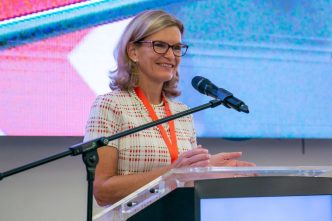
Last month, UN member states elected American candidate Doreen Bogdan-Martin as the next secretary-general of the International Telecommunications Union in a fiercely contested diplomatic battle against a Russian candidate (and former executive of Chinese technology …
On 29 September, member states of the International Telecommunications Union voted to elect Doreen Bogdan-Martin as the organisation’s next secretary-general. Bogdan-Martin—a US national who’s served in the ITU since 1994—was in contention for the top …