

As we celebrate World Intellectual Property Day today on 26 April, let’s remember all the innovation that has been stolen. While innovators have had their intellectual property stolen for centuries, in modern times they face …

As we celebrate World Intellectual Property Day today on 26 April, let’s remember all the innovation that has been stolen. While innovators have had their intellectual property stolen for centuries, in modern times they face …

State-sponsored and cyber-enabled theft of intellectual property is on the rise as countries employ all means at their disposal to gain advantages in a global environment increasingly shaped by strategic rivalry and political mistrust. This …

Last month, UN member states elected American candidate Doreen Bogdan-Martin as the next secretary-general of the International Telecommunications Union in a fiercely contested diplomatic battle against a Russian candidate (and former executive of Chinese technology …

On 29 September, member states of the International Telecommunications Union voted to elect Doreen Bogdan-Martin as the organisation’s next secretary-general. Bogdan-Martin—a US national who’s served in the ITU since 1994—was in contention for the top …

Small businesses are not immune to cybersecurity incidents. In fact, they’re often more vulnerable because they lack the time, resources and sometimes the skills to prepare for and defend against an attack, or to mitigate …

The UK government’s Integrated review of security, defence, development and foreign policy presents the Indo-Pacific as a region of increasing geopolitical and economic importance over the next decade and suggests that competition will play out …

It’s been a month since the Hunga Tonga–Hunga Ha’apai volcano erupted and cut off Tonga’s domestic and international communications. While satellite providers rushed to assist with restoring a basic connection, local media report that current …
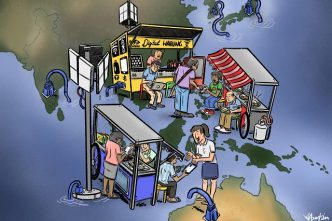
The Covid-19 pandemic has accelerated digital adoption and digital transformation in many regions of the world. In Southeast Asia, this has driven unprecedented demand for online services in retail, digital payments, education and health. However, …
After a lag of six years, a renewed global cyber consensus was reached on 12 March when the UN member states agreed to the final report of the open-ended working group on information and communication …

Together with 24 other states, Australia will serve on the new UN Group of Governmental Experts (UN GGE) on ‘developments in the field of information and telecommunications in the context of international security’. Following the …
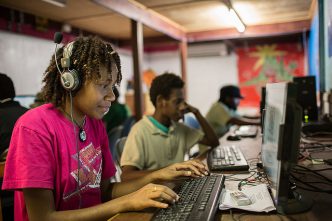
Each year the World Bank tackles critical development issues in its world development report. For 2016, it chose the topic of ‘digital dividends’. The researchers concluded that digital technologies have spread rapidly in much of …

In the European summer of 2014, cyber operators from the Dutch Joint Cyber SIGINT Unit—operated by Dutch intelligence and security services—gained access to APT29, better known as Cozy Bear. This well-known Russian hacker group targets …