

It will be a welcome step if the current Independent Intelligence Review (IIR) recommends further empowering the Office of National Intelligence (ONI) to lead capability development and, by extension, to achieve a more collective approach …

It will be a welcome step if the current Independent Intelligence Review (IIR) recommends further empowering the Office of National Intelligence (ONI) to lead capability development and, by extension, to achieve a more collective approach …

Even mindboggling actions typically have a logic that’s discoverable, whether Hitler declaring war on America after Pearl Harbor or Putin invading Ukraine. That’s why ‘strategic warning’—informed by ‘strategic warning intelligence’—is so important. Indeed, intelligence’s intuitive …
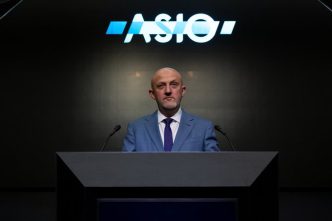
Australian Security Intelligence Organisation (ASIO) Director General Mike Burgess’ Annual Threat Assessment highlighted the principal threats to Australia’s security—in ASIO’s 75th anniversary year. One of the positives from these public announcements, and this was Burgess’ …
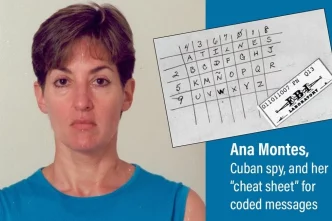
Ana Montes was US Intelligence’s ‘Queen of Cuba’. The Defence Intelligence Agency’s leading Central America analyst; go-to voice on Cuban intentions and capabilities; eldest daughter of a family dedicated to US Government service. She was …
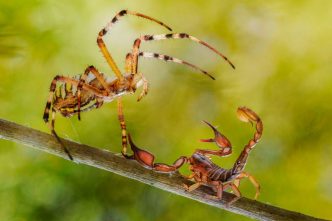
Scorpions are fascinating. Found on every continent except Antarctica, their fossil records span 420 million years. Indeed, they might be the oldest land animals still in existence. With astonishing resilience, they withstand heat and cold …
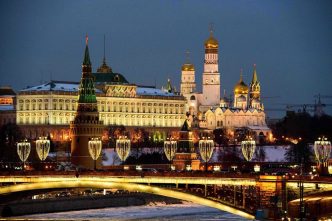
Tuesday [23 January] marked 20 years since the passing away, in exile, of an unpretentious archivist—and one of the most remarkable and consequential figures in international espionage—Vasili Mitrokhin. A KGB officer for more than three …
Australian intelligence’s foremost challenge is to further evolve from being a ‘national intelligence community’ to generating ‘national intelligence power’. It will do that by more effectively integrating intelligence into the government’s broad policymaking, strategising and …
‘Our intelligence agencies underpin our national security objectives, including helping to safeguard our sovereignty in an increasingly uncertain security environment. This Independent Review will make sure that our intelligence agencies are best positioned to serve …
You didn’t read about it in the Australian media, but back in August the directors-general of the Office of National Intelligence, Andrew Shearer, and the Australian Secret Intelligence Service, Kerri Hartland, met Timor-Leste Prime Minister …
Recent research from ASPI finds that Philip Flood’s 2004 inquiry into Australian intelligence agencies proved an inflection point in the national intelligence community’s development. In addition, the Flood report grappled with a matter at the …
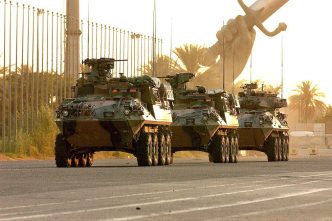
As I noted on the recent 20th anniversary, the Iraq war, and more particularly the intelligence failure in relation to Iraqi weapons of mass destruction, initiated an inquiry the following year, conducted for the Australian …
The conduct of intelligence activities is inherently a strategic dynamic between rival actors simultaneously playing offence and defence. Analogies with war, sporting contests and competition abound. Action and reaction. Denial and deception. Or, in its …