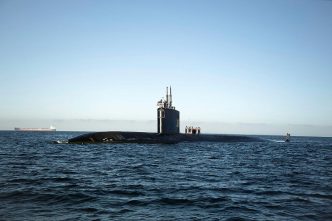

In my post yesterday I highlighted the stand-out attributes of submarines, Australia’s need for a greater range/endurance than is available off the shelf, the difficulties of increasing the payload and mobility of an existing design and …
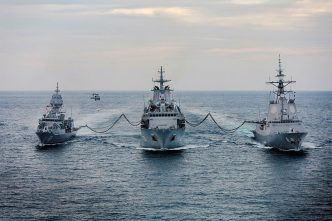
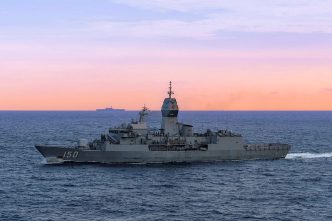
A lively debate has emerged on Australia’s $8 billion acquisition of three Hobart-class Air Warfare Destroyers (AWDs*). Some see the possibility that the new government in Canberra might add another AWD to this procurement order—though …
The Royal Canadian Navy’s (RCN) submarine fleet, consisting of four Victoria-class vessels, has been plagued by numerous problems since their acquisition from Great Britain between 2000 and 2004—including a dent found on HMCS Victoria in …
Benjamin Schreer offers some important qualifications to Radford’s initial remarks about the relevance of Japan’s new carrier, Izumo, both for the JMSDF and in relation to naval developments and ramifications for naval politics in Northeast …
Ben Schreer’s recent post on China’s maritime dilemmas reminded us that we should always think about what capabilities are intended to achieve, and not make a fetish of the capabilities themselves. Beijing’s progress in A2/AD …
Attention has often focused on China’s undersea fleet of conventional and nuclear-powered submarines, as an integral component of an anti-access and area-denial (A2/AD) complex that also includes shore-based aircraft, land-attack and anti-ship missiles, integrated air …
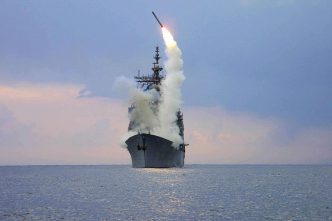
Despite the aphorism that generals always prepare for the last war, the 2011 Libyan campaign to oust the Gadhafi regime presents some useful pointers regarding the exercise of deadly force by Australia. This is especially …
Rising tensions in the South China Sea over the past few weeks have served to highlight the rancorous nature of strategic competition in Asia. Following its stand-off with Philippines over the Scarborough Shoal and a …
In January, Canadian Prime Minister Mark Carney told the World Economic Forum something that Western democracies have long known but rarely said in public. The rules-based international order, he observed, was always a pleasant fiction. …
Rather than gradually expanding its defence and security engagement across the Indo-Pacific, Beijing may choose to accelerate its trajectory, pushing boundaries to advance its interests and take advantage of a distracted United States. The result …
China’s expanding presence beyond the first island chain is most likely to generate incidents, friction and escalation risks not through deliberate aggression but through growing operational proximity. As Chinese military, paramilitary and law-enforcement activity becomes …
China and Iran have gradually deepened research ties in dual-use and emerging technologies over the past 15 years, the latest update to ASPI’s China Defence Universities Tracker (CDUT) shows. The scale of this collaboration is …