
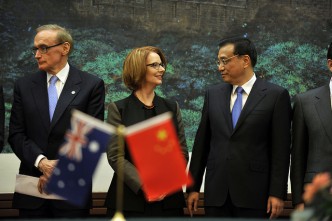
What will the new White Paper say about China? More precisely, what will it say about the emerging strategic contest between China and the United States and its consequences for Australia? Many observers, myself included, …

What will the new White Paper say about China? More precisely, what will it say about the emerging strategic contest between China and the United States and its consequences for Australia? Many observers, myself included, …
There has been a lot said on the Boston Bombings. ASPI’s Toby Feakin on what we know and don’t know: UPDATE: The Strategic and Defence Studies Centre at ANU will be holding a panel discussion on …
Mr Dobell is no doubt aware that when Howard cut the bureaucracy out of the decision-making process on Iraq he was replicating what Menzies did on Vietnam. In 1974, Whitlam instructed the Foreign Affairs Department …
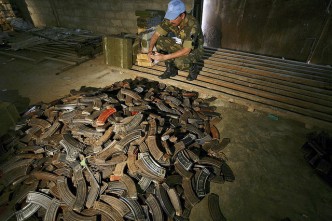
As Australia begins to take a greater role in African security issues, we must also begin to better scrutinise the role the international community has had in perpetuating the militarisation of political power in many …
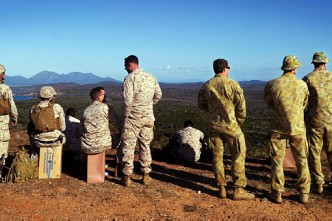
Defence alliances thrive on liberal doses of new ideas to turn the wheels of big military machines doing practical things. If the ideas dry up, alliances slow down and eventually cease moving forward. Those charged …

At a recent ‘track 2’ meeting between Americans and Australians, China’s nuclear arsenal was the subject of considerable debate. In the view of one participant, Beijing’s actual number of strategic nuclear weapons is much higher …
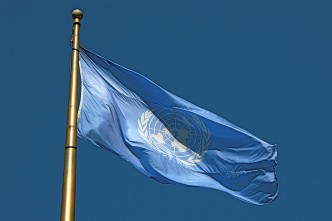
The two year conflict in Syria has been shining a very bright light on divided great power attitudes to international leadership. It’s not a flattering picture. Despite appalling suffering, the deaths of tens of thousands …

Guest editor Anthony Bergin Eighty years ago Australia received from Great Britain its largest ever gift: six million square kilometres of Antarctica. Three years later it became the Australian Antarctic Territory (AAT). 42% of the …
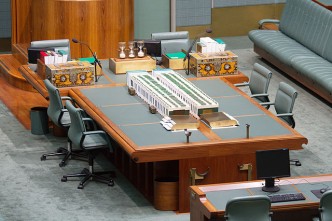
Yesterday I described how a series of important security-related public policy documents had been effectively ‘tabled’ in public before the Parliament had seen them. In the case of the National Security Statement, it never made …
A couple of weeks back, ASPI hosted a half-day meeting between economists and strategists. The goal was to explore how the two groups can cooperate in a public policy sense. It turned out to be …
“We laughed, knowing that better men would come, And greater wars: when each proud fighter brags He wars on Death, for lives; not men, for flags.” – Wilfred Owen, The Next War Australia and New …
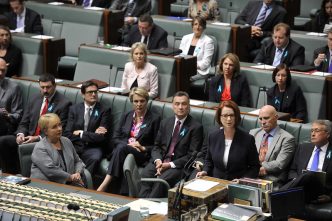
The Prime Minister has failed to put her National Security Strategy to Parliament. The document hasn’t even been tabled in the House. The Strategy is a public statement of policy, certainly, but the complete bypassing …

Guest editor Anthony Bergin If I were an Australian scientist excited by the prospect of novelty in Antarctic-derived organic material or processes, I might have a tough time getting there, collecting my samples and bringing …

In my previous post, I found myself agreeing with Jim Molan that the ADF was in danger of entering a period of serious decline in its ability to maintain capability. The combination of tight budgets and …
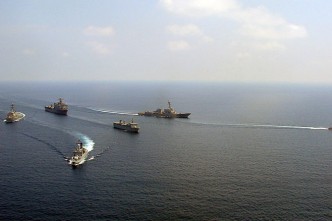
On 26 March 2013, the People’s Liberation Army Navy conducted a major naval exercise in the South China Sea, close to what China calls Zhengmu Reef. News of the exercise would have been lost amid …
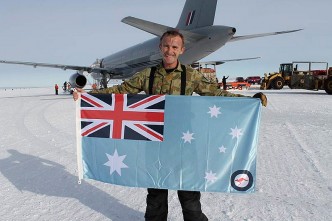
The Antarctic has never prominently featured in Defence white papers; indeed it rated a mention in only two of the last four, those in 1987 and 2009. Written some 22 years apart, the difference in …
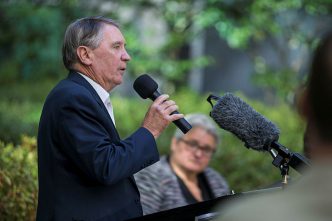
My previous column compared the only Australian mandarins who have headed both Foreign Affairs and Defence, Dennis Richardson and Arthur Tange. To further pursue that comparison, step forward two other mandarins: Philip Flood, former Secretary …
In a recent post, Neil James made some interesting points about defence spending metrics and the political economy of defence in a democracy. With the federal budget due in three weeks’ time, I thought I …

Guest editor Anthony Bergin Article 1 of the Antarctic Treaty provides that Antarctica ‘shall be used for peaceful purposes only’. It prohibits ‘any measures of a military nature, such as the establishment of military bases …

Jim Molan wrote recently that the ADF is ‘…being pushed into a state where its capabilities are at, or will soon be at, a state from which they will not be able to be revived …