Articles by " Graeme Dobell"

The order of Fiji’s New Order

20 May 2013
Posted in: General By

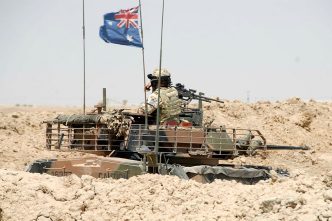
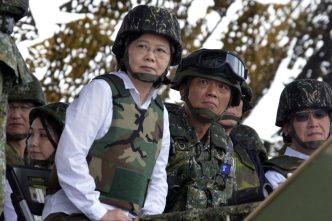
Soldiers from Fiji serve as the guard unit of the United Nations Assistance Mission in Iraq (UNAMI). 6/Feb/2009.The political settlement that Fiji’s New Order regime is preparing to impose on its subdued society and decimated polity is a lousy outcome after 13 years of struggle and schism. Yet Australia, New Zealand and the rest of the South Pacific have little option but to persist in engaging with the regime as it bolts in place the narrow terms for next year’s election. The decision to engage is why Canberra is prepared to put up with the current bout of silliness from Suva over issuing a visa for the new Australian High Commissioner.

A flawed and limited election in 2014 will be better than no election at all. Granted, it’s clear that the election will seek to enshrine the people and the interests of Fiji’s New Order. That outcome, however, was always in view. For Australia and the region, seeking accommodation with the regime is a sad acknowledgement that Fiji has been unable to save itself. In the contest between power and principle, power has triumphed.

The relatively tough line Canberra has taken towards the Supremo and his regime since Bainimarama’s second successful coup in 2006 was based on two ideas. One was that with a bit of bashing and barracking, the military would go back to barracks. The other thought – both lofty and practical – was the commitment to a set of democratic understandings that have wide support and proven utility in the South Pacific. Read more

The back-to-barracks hope drew strength from the experience of previous coups in 1987 and 2000, when the military had acted reasonably quickly to hand control back to civilians. The second idea was that Australia and the region had to do everything possible to help any resistance to the coup culture that could be mounted from within Fiji by its people and institutions. The aim was to give as much outside assistance as possible to Fiji’s political parties, the courts, the churches, the chiefs, the media and the various elements of civil society. If Fiji could mount some resistance to the descent into coup-coup land, then the region had to do everything possible to help (hence the steady increase in Australian aid).

Both those ideas have failed. The military and its cronies have entrenched themselves, and the regime has been extraordinarily successful in cowing and controlling other significant elements of Fiji’s society. The Supremo and his useful idiots have got a lot more mileage than they deserved from the old junta jingle that the soldiers had to kill democracy to save democracy; the Fiji version is that the military is slaying the old politics in order to deliver a new, multi-racial democracy. A clearer view of what has befallen Fiji is that one institution of the state has triumphed over all others. And, inevitably, that has allowed the colonels, the cronies and the carpetbaggers to cash in.

To summarise a complex conundrum, here’s a brief description of Fiji’s New Order regime, with links to previous articles that lay out these arguments in more detail. The first concept (or conceit) is to see Bainimarama’s government as having similar elements to the New Order constructed by Suharto in Indonesia. As with Indonesia, Fiji’s New Order is built by a military that proclaims its dual function: to both guard and guide the nation.

Secondly, Bainimarama has been constructing his New Order for 13 years, since his first successful coup in 2000—the George Speight coup attempt was foiled by Bainimarama’s more powerful coup. The construction effort has been shambolic and ad hoc (reflecting the Supremo’s intellect as much as anything) but the cumulative effect is in view. Bainimarama’s one clear achievement over these 13 years has been to place the military at the centre of Fiji’s society, administration and politics. The Supremo’s goal is to entrench himself and the absolute rights and special prerogatives of Fiji’s military.

Thirdly, Fiji’s New Order is to make the logical step of expressing itself as a political as well as a military force. The military is about to show its dominance through the creation of a political party that will see Bainimarama ‘elected’ as Prime Minister. If quote marks can ever have ironic effect, then put them around ‘elected’ in this context. Next year’s election will give the New Order a useful political carapace. With Fiji’s old political parties barred, the military will be able to offer its own version of Suharto’s Golkar Party.

Suharto created Golkar as the regime’s parliamentary vehicle (Golkar from golongan karya, or ‘functional groups’) drawing together hundreds of groups in society: rural workers, labour unions and businesses. Golkar enabled the army to create a party while claiming it was a new form of movement, not tainted by old party politics. The Suva Supremo will have no trouble denouncing the taint of old party politics while introducing his gleaming replacement version.

The Supremo’s sense of entitlement mirrors that of the military he leads. The former Fiji colonel, Jone Baledrokadroka, has written of the ‘inflated corporate self image’ of the military, built especially on its constant deployment on peacekeeping operations for the UN.

One of the unintended consequences of the military’s international experience as a mediator of political tensions was the growing belief that it should perform the same role at home. The demands of peacekeeping inflated the size of the military just as it inflated its view of itself, making the military what Baledrokadroka calls ‘a state within a state.’ Under the Supremo, the boys in uniform have done away with the parallel bit and simply taken over the state.

Baledrokadroka has been keeping count of the number of officers being shifted across to do top government jobs, from heading departments to running state bodies. The recent total he gave me was that 66 military officers are now doing senior civilian jobs across the Fiji Government.

Bainimarama will merely follow the trend he’s imposed when he shifts from being Supremo to become the ‘elected’ Prime Minister. The big questions awaiting Fiji are about the size of the victory delivered to Bainimarama’s version of Golkar and whether the vote will have any impact on the habits and hopes of the New Order. Certainly, the colonels, cronies and carpetbaggers are set to dig in deeper, with their interests legitimised by a ‘popular’ and ‘democratic’ process. The rest of the world will have to take the election at face value, however unlovely the face.

Graeme Dobell is the ASPI journalism fellow. Image courtesy of Flickr user United Nations Photo.

Waiting on Fiji

13 May 2013

Fiji

To see how difficult it is to do normal business with Fiji’s military regime, consider the problem of getting the new Australian High Commissioner into Suva. Wednesday will mark the six-month point in a diplomatic dance in which Suva mixes moments of promise with large doses of denial. The symbolic and the silly intermingle. Important elements of diplomatic engagement are at stake but the shenanigans demonstrate the Bainimarama regime’s recurrent tendency to veer towards the petty and the capricious.

Back on December 15 last year, the Foreign Minister, Bob Carr, announced what was welcomed as a diplomatic breakthrough with Fiji. His statement started like this:

Foreign Minister Bob Carr today announced Ms Margaret Twomey as Australia’s High Commissioner to Fiji, ending a three-year hiatus caused by the expulsion of Australia’s previous High Commissioner in 2009. Senator Carr said the decision to restore an Australian High Commissioner to Fiji was an agreed outcome of trilateral talks with Fiji and New Zealand in Sydney in July 2012… [Ms Twomey] is expected to take up her appointment in February 2013. Read more

Let’s look at the series of steps that led up to that announcement and what hasn’t happened since. The Foreign Ministers of Australia, New Zealand and Fiji met in July last year and agreed that it was time to rise above Suva’s previous habit of expelling Oz or Kiwi diplomats whenever the military regime felt offended. With that agreement in hand, negotiations on the Australian to go to Suva began in earnest.

Margaret Twomey was both an obvious and excellent choice by Canberra. If there was any possible mark against her from Suva’s view, it might be that Twomey knew the place and the players too well because of her previous service as deputy High Commissioner. She was in that number two slot in Suva in 2000 when George Speight and some renegade troops stormed Parliament and took Prime Minister Mahendra Chaudhry and his Cabinet hostage. Speight’s coup attempt was the one that ultimately failed; the coup that mattered was staged by Fiji’s military commander, Frank Bainimarama, who imposed martial rule and seized government as he dismissed the President, Ratu Mara. Bainimarama negotiated an end to the siege which gave formal and legal effect to the overthrow of Chaudhry. Bainimarama then imposed his own choice, Laisenia Qarase, as the replacement Prime Minister.

So Margaret Twomey was on the ground in Suva when Bainimarama carried out his first successful coup in 2000 to lay the ground for what eventually became Fiji’s New Order government. She’s now been selected to return to try to restore relations with the New Order regime that imposed itself by a second successful coup in 2006, overthrowing Qarase because he’d fallen out with the Supremo who had first raised him up. You can see how some of the wiser heads in Suva (yes, some still exist) might have paused to consider that Twomey knew them too well.

Nevertheless, Suva gave official agrément to Twomey’s appointment. (Agrément is the formal agreement by a receiving state that it’s prepared to accept a named individual as head of a diplomatic mission.) Obtaining such agrément before an ambassador or high commissioner is despatched to a post (in practice, before a name is public announced) is a firm requirement under the Vienna Convention on Diplomatic Relations.

When Carr put out his statement on December 15, he was acting both with the agrément and the agreement of the Fiji Government. Suva had accepted Twomey’s nomination and this was seen as a sign that the process of diplomatic reconciliation could gather pace in line with the progress towards Fiji’s elections in 2014. Twomey was recalled to Canberra from her then post as Australia’s Ambassador to Russia so she could prepare to be in Suva in February. Now she sits in Canberra and waits.

The argument coming from Fiji is that the regime is angry that Australia continues to impose ‘smart sanctions’ that make it hard for servants of the regime to travel to or via Australia. Canberra argues that it has made the application of the travel ban more flexible and deals with each case individually. But the continuing application of the travel sanction does actually inconvenience the regime, which definitely amounts to a serious affront if you view the world from Suva using the Supremo’s understanding of how things should work.

The anger the regime has felt since the sanctions were imposed in 2006 trumps the interests served by the agreement for the return of the Oz High Commissioner. Not missing an opportunity to miss an opportunity, Suva has demonstrated its power by forcing Twomey to wait on its pleasure.

Following columns are going to examine the clear need for Australia to engage with Fiji’s New Order regime. But the continuing Suva silliness over the Oz High Commissioner is but one example among many of how difficult this engagement will be.

Graeme Dobell is the ASPI journalism fellow. Image courtesy of Flickr user john.trif.

The tacit consensus for the White Paper

6 May 2013

Senator Johnston onboard HMAS Waller, a Collins Class submarine.

The electric storm that rages around the Defence White Paper has big elements of ritual politics and tacit consensus, despite the intense arguments over plans, priorities and projections.

This is standard Oz politics played as a contact sport. As Churchill observed to Menzies: ‘My goodness, you Australians do seem to play your politics with a fine 18th Century flair’. The senior President George Bush made the same comment on the vigour of our pollies when he arrived in Canberra to visit his mate, Bob Hawke, only to be greeted by the new leader, Paul Keating, still wiping the blood from his toga.

The stakes are high and they play for keeps, but not all the noise is genuine. The White Paper has generated a tempest of tough tackles and verbal roundarms among the political class, but not too far beneath the uproar resides a broad measure of tacit agreement. Read more

The bipartisan consensus covers issues of money, gear and geopolitics. A notable element of Oz politics over the past 60 years is how the Coalition and Labor wage war over wars but quietly reach fresh agreement on reframing Defence policy at the end of the conflict. As it was after Vietnam, so it is now after Iraq (with Afghanistan the exception, because the avowed consensus has stayed firm from start to the approaching finish).

Keep the history of tacit consensus on policy in mind as the two sides rip into each other over the strength or woeful state of Australian Defence. The question of money is at the centre of the storm just as it is central to the quiet consensus. The Coalition rages about the paucity of the money while quietly adopting Labor’s spending base and its blue sky aspiration to rebuild spending. The elegance of the Opposition position—denounce the cuts but take the cash—drives Labor berserk because the politics of this plays well for Tony Abbott.

Remember John Howard’s claim that interest rates would always be lower under the Coalition? Tony Abbott can do a re-run: the eventual increase in Defence spending, whenever it happens, will always be greater under the Coalition. The Howard interest rate pledge ran into the reality of Reserve Bank responsibility, whereas Abbott can summon up recent history, comparing the dozen years of Howard-era largesse with the recent Defence diet imposed by Labor. Mark it as one of those ‘Bingo’! moments that are the bliss of politics: an unenforceable promise of greater future spending with no date attached, burnished by a tinge of historical evidence. The pain for Labor is exquisite but Stephen Smith can hardly scratch the spot.

The new White Paper repeats a pattern of recent history which decrees that the Coalition sets up the aircraft purchases while Labor does the submarine announcements. Labor has followed the patched-together Coalition process on planes which will produce a mix of JSFs and Super Hornets. For all the cost blowouts and expert dogfights over planes, the political consensus stands undisturbed.

Ditto for the subs, although the timeline keeps sinking. Labor takes the off-the-shelf option off the table and embraces Adelaide again. And, almost without a murmur, the Coalition says: ‘Yep, us too’. Future reviews will build on past reviews but again the unanimity is a thing of strange beauty. The strength of the consensus Labor drives on subs is remarkable given all the pain that the Collins boats caused the Coalition throughout the Howard years.

When looking at the geopolitics rather than the politics, the twin positions soar in unison as the ticks of agreement litter the new White Paper. Post Iraq and Afghanistan, Labor and the Coalition agree that we now want to turn our eyes to the neighbourhood. The fact that the two sides love the alliance is the constant; the one contest is who can show the greatest love. The focus on partnering Indonesia is becoming a truism of Oz strategy—a democratic Indonesia means no hesitation is needed in the military embrace.

Kevin Rudd’s self-described ‘brutal realism’ on China is the ghost from the 2009 White Paper which neither Labor nor the Coalition wants at this feast. The ramping up of the defence relationship with Japan that started under Howard continues.

A Labor Defence Minister from Perth has no problem embracing the construct of the Indo-Pacific as the first element to be discussed in the chapter on the strategic outlook. And with the Opposition’s shadow Foreign and Defence Ministers also hailing from WA, that Indo-Pacific tick is happily unanimous.

The tacit consensus on cash, of course, crashes headlong into the consensus on kit. One consensus cancels the other. Pointing out this huge problem brings to mind the wry admonition of a previous Defence Secretary when his officials raised the flawed policies produced by their political masters: ‘You’re being logical again, stupid, I’ve warned you about that’.

The noise of the political biff and bang will echo around the claims of logic while obscuring much that will be undisturbed because of the strength and width of the tacit consensus.

Graeme Dobell is the ASPI journalism fellow. Image courtesy of Senator David Johnston

The National Security Strategy didn’t go to Parliament – part II

30 Apr 2013
Posted in: General By

An empty House of RepresentativesYesterday I described how a series of important security-related public policy documents had been effectively ‘tabled’ in public before the Parliament had seen them. In the case of the National Security Statement, it never made the table in Parliament at all. Now the dogs are barking and the Canberra system is whispering that the trick is about to be repeated with the public release of the new Defence White Paper in the next fortnight, before Parliament assembles on May 14 for the Budget sessions. The whispers have it that the Government wants to announce the White Paper ahead of the Budget, instead of late June as previously stated by the Defence Minister, ‘so it doesn’t clutter post-budget discussion of more electorally saleable issues’. The Navy would be well advised to have a ship on standby so it can do picture duty as with the previous White Paper.

The Presidential Pretensions that have long afflicted Australian Prime Ministers feed a desire to rise above the clutches of the Parliament. The way caucus cut down ‘President’ Rudd in 2010 and Labor’s constant vigilance on the floor of the House of Reps to sustain a minority government this term don’t seem to have had much effect on the hankering for the Oval Office. Canberra has cherry-picked some excellent elements from Washington, such as the formation of the National Security Committee of Cabinet and in the creation of the post of a National Security Adviser. The US President issues a National Security Strategy (PDF); what could be more natural than for the Australian President to do the same? Read more

The Minder Mentality feeds Presidential Pretensions. For the political Minders clustered in the executive wing of Parliament House, the focus is on the need to win the news cycle and dominate the ‘narrative’, to deny the Opposition oxygen or even a place on the stage. And stage-managed events allow the Minders to capture the TV pictures as well as control the yarn-of-the day. For instance, the equation for the 2009 Defence White Paper was:

PM + Navy ship + Sydney Harbour = Great Pictures! = Good win.

The Presidential Pretensions and the Minder Mentality don’t mesh easily with the operation of the Canberra system and the functions of Parliament. The two tendencies are more than just a break with history—beyond disrupting process, the Pretensions and the Mentality don’t always or naturally generate good policy or even successful political strategies.

To teach Oz Politics & Government 101 for just a moment: the Australian Parliament produces laws, leadership and legitimacy, and it packs much of this substance and its symbols into the one building; the House of Representatives, the Senate and the Executive all nestle beneath that one huge flagpole. Shutting the Parliament out of doing the thinking about Defence and National Security ignores the basic workings of this system and denies the executive the usual benefits of legitimacy and legitimisation of policy. It might be surprising, but having a Parliamentary stoush rather than merely chanting the message-of-the-day can light up an issue and help improve a policy.

Ever ready to help, ASPI has been musing on the natural part Parliament should have in such major matters. And these are ideas that don’t require any new dollars to be spent; that’s really unusual in this game. For a start, see Peter Jennings thoughts on the need to strengthen Parliament’s role over military operations. My extra (no cost) idea is that the Labor and the Coalition should pledge at the next election that future White Papers and National Security Strategies will be presented and debated in Parliament. It should be an easy pledge, given that’s the way the system is supposed to work. Add to this a further commitment to what the Gillard Government has already indicated: these White Papers and Strategies will be synchronised and issued in a five year cycle.

To augment this process, the Parliament’s Joint Standing Committee on Foreign Affairs, Defence and Trade should hold an inquiry and a series of public consultations every five years to assess the White Paper and Strategy. A political pledge that makes for good process and improves policy without costing a dollar: What President or Minder could object?

Graeme Dobell is the ASPI journalism fellow. Image courtesy of Wikimedia Commons

The National Security Strategy didn’t go to Parliament

29 Apr 2013
Posted in: General By

PM Gillard presents the fifth annual Closing the Gap Statement. 6 February 2013. House of Reps, Parliament House, Canberra Pic David Foote

The Prime Minister has failed to put her National Security Strategy to Parliament. The document hasn’t even been tabled in the House. The Strategy is a public statement of policy, certainly, but the complete bypassing of the Parliament shows how far Presidential Pretensions and the Minder Mentality in the ministerial wing have skewed the workings of the Canberra system.

To be clear, the Gillard Government didn’t just fail to bring on any Parliamentary debate about what’s proclaimed as a central definition and driver of its international policy; the government didn’t even give the Strategy to Parliament. I’ll return to that larger failure to debate in a moment: the initial surprise this column is emphasising is the ignorance and arrogance of ignoring Parliament. Whether by blunder or design, the Gillard Government didn’t perform the simplest of actions, the formal presentation of the National Security Strategy by tabling it in the House of Representatives. This is the omission of a government that has problems with process.

Taking the Prime Minister’s own ambitions for the Strategy as a guide, the oversight is strange. Here is how the PM’s Department website describes the importance of ‘Australia’s first National Security National Security Strategy’, launched by Julia Gillard in a speech at the Australian National University on 23 January: Read more

Strong and Secure: A Strategy for Australia’s National Security marks a new national security era in which the dramatic shift of economic and strategic weight to Asia dominates our national security outlook over this decade. The Strategy provides the overarching framework to guide Australia’s national security efforts over the next five years.

As a statement of ‘overarching framework’ the Strategy itself (PDF) is undeniably a significant document. We’re in new territory when such an announcement of strategy and policy doesn’t reach the Parliament. Indeed, Labor is breaking with its own precedent. On 4 December 2008, Prime Minister Kevin Rudd delivered what the PM’s Department used to headline as ‘The First National Security Statement to the Australian Parliament’. The text has now disappeared from the website of the PM’s National Security and International Policy Group, but if you go to the House of Representative’s Hansard for that day you’ll find Rudd’s statement and also a reply from the Opposition Leader, Malcolm Turnbull.

It was that equal-time-for-the-Opposition custom that seems to provoke so much resistance in the Minder Mentality. The Mentality and the Pretension to play presidential go a long way to explain why the first National Security Statement was delivered in the House while the first National Security Strategy becomes an exclusive creature of the executive.

After I checked with both the House and Senate Tables Offices and found that the Strategy didn’t exist as a Parliamentary paper, I put a question to the PM’s Media Office: why has this strategy document not been presented or tabled in Parliament?

A spokesperson for the PM replied:

The Prime Minister launched the National Security Strategy on 23 January 2013, ahead of the resumption of Parliament on 5 February 2013. The Strategy is published on the PM&C website (http://www.dpmc.gov.au/national_security/national-security-strategy.cfm) and is available for public scrutiny. The Strategy has been the subject of parliamentary scrutiny, including during Senate Additional Estimates hearings in February 2013.

The Senate Estimates process is one of the major Parliamentary innovations of recent decades and is hugely useful. But on this reading, Parliamentary scrutiny of Australian international policy is best served by Senators in committee questioning senior public servants. It’s an interesting view of how the Canberra system reviews national security.

By not even tabling the Strategy in Parliament, the Government is taking a troubling pattern to a natural conclusion. After following the habit of every preceding PM in presenting a major security statement to the House in 2008, Rudd fell prey to Presidential Pretension and the Minder Mentality when he launched the 2009 Defence White Paper on a Navy ship in Sydney Harbour. What should have been the PM’s tabling statement that day was delivered to the TV cameras and assembled sailors rather than to MPs.

Gillard followed that Rudd innovation by releasing her Asia Century White Paper last year not on the floor of Parliament but at the Lowy Institute in Sydney. So it was that the National Security Strategy was released at the ANU’s National Security College; the difference in the pattern is that at least the 2009 Defence White Paper and the Asia Century White Paper did eventually get tabled in Parliament. But the de facto tabling statements were made when the documents were released to the public, not when they became papers of the Parliament.

Tomorrow I’ll have a look at the impending release of the new Defence White Paper and how it might follow this now established pattern—and what could usefully be done to re-establish Parliamentary oversight.

Graeme Dobell is the ASPI journalism fellow. Image courtesy of Flickr user Julia Gillard.

Dennis Richardson and Arthur Tange: part II

24 Apr 2013
Posted in: General By

Dennis Richardson, Image credit: Luke Wilson, ASPI

My previous column compared the only Australian mandarins who have headed both Foreign Affairs and Defence, Dennis Richardson and Arthur Tange. To further pursue that comparison, step forward two other mandarins: Philip Flood, former Secretary of DFAT, and Max Moore-Wilton, former Secretary of the Prime Minister’s Department.

In in his memoir, Flood describes Tange as ‘one of the truly great mandarins’ who held the rank of departmental Secretary for 25 years. Flood writes that Tange was driven by his ‘passion for Australia, his powerful work ethic and his strong belief in a distinctive, forceful and uniquely Australian foreign policy. Tange was a serious man with no time for fripperies’.

Flood told me recently that he would nominate Tange as one of Australia’s three greatest public servants of the 20th century, along with Robert Garrran and Roland Wilson. In the contemporary section of Flood’s Public Service Parthenon, Dennis Richardson is rated as one of the three top public servants of recent decades, alongside Max Moore-Wilton and Ken Henry. Read more

Flood makes the point that evaluating Tange and Richardson is deeply problematic because of the way Canberra has changed:

The era of Tange/Wilson/Garran is not comparable with that of Richardson/Henry/Moore-Wilton. The times are so different and, among other factors, now there is no such person as a ‘Permanent Head’. For some time Secretaries have not been ‘exclusive’—they must be ‘inclusive’ and far more responsive to their staff. Post-1990 the Tange/Wilson/Garran models would not have worked.

I contacted Max Moore-Wilton for his assessment and he, too, ranked Richardson as ‘an outstanding public servant, one of the great public servants of his generation.’ An element of the Richardson style that would have attracted Stephen Smith is his willingness to force through a ministerial decision even if he has just as forcefully opposed it. Moore-Wilton said Richardson is robust in his argument but equally as strong in carrying out decisions: ‘Dennis did what was expected of him, whether he totally agreed with it or not.’

For Max Moore-Wilton, Tange and Richardson come from different eras but also brought different characteristics to their service:

I remember Arthur Tange from my time as a young public servant. Dennis Richardson is not another Arthur Tange—they are entirely different characters. Tange was an elitest of the old school.  Richardson is much more modern. He has strong opinions but he is much more socially inclusive, not exclusive. Tange was exclusive, very much of the club: he mixed with a layer, and only the top layer. Richardson is much more open to the people who work for him. He is strong minded but he is representative of the best part of the public service, especially in the need to be rigorous in thinking.

The Moore-Wilton view of Tange is coloured by his distaste for Tange’s creation of the military–civilian diarchy at the head of Defence: the division of the management of Defence, under the Minister, between the Chief of the Defence Force and the civilian Secretary. ‘I’m no fan of the diarchy,’ Moore-Wilton said. ‘It has diffused decision-making to a series of joint-committee type structures. It’s strange for a man who was as strong in personality as Tange to produce a structure like the diarchy.’

And that leads to the thought that perhaps Richardson is the man who could tackle Tange’s remaking of Defence in the 1970s, what Peter Edwards in his biography of Tange calls, ‘the greatest peacetime reform in Australian defence organisation in the 20th Century’. Max Moore-Wilton reflects: ‘No politician has been strong enough to manage to change the diarchy. Richardson might have the ability to change things’.

If Dennis Richardson can re-do Tange’s diarchy, he really will rank as one of the great mandarins.

POSTCRIPT: Many moons ago, when I sometimes talked to the military about media-defence relations (talked, I stress, not taught), I contended that it helped to see Tange as akin to a feudal lord. Peter Edwards used my yarn as one illustration in his chapter on Tange as ‘The mandarin unchallenged’.

The feudal reflection summoned a vanished epoch when Secretaries were permanent as well as eminent.  Today’s mandarins are equally eminent, but they serve at the Minister’s pleasure. The Paul Barratt sword hangs above every Secretary’s head—the court-established right of a Defence Minister to dismiss a Secretary on almost any pretext (poor ties, bad haircut?).

No such problem for Tange in my depiction of him as the chancellor of a medieval kingdom, in which the king and the princes (the Prime Minister and his ministers) were too often away partying and touring far estates. The civil servants were to be seen as the peasants working the fields and the servicemen were the beasts of burden. And in this Tange hierarchy, the journalists were to be seen as the ticks and fleas that afflicted everyone, from the king to the peasants and the livestock.

Graeme Dobell is the ASPI journalism fellow. Image courtesy of Luke Wilson, ASPI.

Dennis Richardson and Arthur Tange: part I

22 Apr 2013
Posted in: General By

Arthur Tange, Economic Adviser to the United Nations Organisation Delegation, ca. 1945

With his appointment as the Secretary of the Defence Department last year, Dennis Richardson has joined Arthur Tange as the only public servant to have headed both the departments of Foreign Affairs and Defence. Given that Tange remade the Defence Department and had a major impact on the structure and style of Australian diplomacy, this puts Richardson in elite company.

Another former head of Foreign Affairs, Philip Flood, judges Tange as one of the three greatest Australian public servants of the 20th century, while he rates Richardson as one of the three top public servants of recent decades. (More on the rankings for history by Philip Flood and Max Moore-Wilton in the next column.) What’s of direct interest for those in the bureaucratic trenches today are the parallels to be drawn between the Tange experience of Defence and what Dennis Richardson faces. Read more

The eras are profoundly different, of course, and there are plenty of differences between the two men; not least that they stand on opposite sides of the rugby divide, with Tange ardent about rugby union and Richardson passionate for rugby league.

Richardson was whisked over from Foreign Affairs and appointed to Defence with a five-year term in October (after Duncan Lewis was abruptly ejected in the direction of Belgium).

Richardson will probably have only half the time at the Defence helm as Tange. When Tange returned from his ‘exile’ as High Commissioner to India in 1970, he was 55 and he went on to spend a decade as Secretary of Defence. Tange retired from Defence at 65, whereas Richardson took over Defence at the age of 65. Accepting those and many other contrasts, look at some of the rhymes and similar rhythms evident between the two Defence Secretaries.

  1. The War is finishing: Tange took over as Australia was exiting Vietnam; Richardson takes the chair as we withdraw from Afghanistan. In both cases, the Defence budget goes down.
  2. Time for a strategic pivot: Tange helped bury the old Forward Defence doctrine and provided much of the intellectual force for what became Defence of Australia. On Richardson’s watch, Australia is promising to give much greater attention to the ‘immediate neighbourhood,’ while embracing a US pivot that gives a higher priority to Southeast Asia.
  3. The Minister requests: Both Tange and Richardson were appointed by Defence Ministers who were determined to get a strong Secretary. In his biography of Tange, Peter Edwards wrote that Malcolm Fraser wanted Tange as his Secretary as ‘someone who was able to stand up to him and argue with him’. As a former Foreign Minister, Smith knew exactly what he was getting in asking the man who served him as Secretary of Foreign Affairs to come to the other end of Kings Avenue.
  4. To control Defence: The Minister wants a man who can help him control Defence, not be controlled by the Department. Tange went into Defence saying he would ‘sort out the generals’ and shake the Department out of decades of inertia; he was scathing about military tribalism, while charging that Defence valued consistency and process over innovation and outcomes (PDF). Tange never got captured by the natives and Richardson knows far too much about Canberra to disappear into the tribes of Russell Hill. As a veteran Labor apparatchik, Smith has an acute nose for the shifting alignment of factions; he saw Duncan Lewis lining up with the military hierarchy to form a powerful civ-mil faction at the top of the Department. Richardson is arguing with Smith as fiercely as Lewis did about the growing imbalance between Defence alms and aims, but there’s not much danger of Richardson confronting his minister as part of military-driven faction. Where Tange profoundly changed the structure of Defence, Richardson’s role is to stay atop the structure.
  5. Deliver a bipartisan White Paper: Tange developed for the Whitlam Labor Government a ground-breaking Defence White Paper which was adopted and publicly issued by the Fraser Coalition Government within a year of taking office. Richardson faces the same challenge. Defence must deliver a Labor White Paper in June that will be acceptable to the Coalition if Tony Abbot wins the September election.
  6. Classic Oz mandarin pragmatists: Australia has a history of producing tough and driving mandarins who can think at the highest level while retaining the national ability to describe a digging implement as a ‘bloody shovel.’ Tange could do rough or smooth with the chilliest edge. One of the many characterisations I heard was that Tange could lower the temperature by three degrees merely by entering the room. Edwards recounts a senior officer hearing Tange deliver a vehement denunciation by telephone to someone further down the hierarchy. As he put the telephone down, Tange said, by way of explanation and almost apology, ‘I have to strike like lightning.’

Richardson is warmer but he, too, can do vehemence with extra vim. Professor Robert O’Neill described Tange’s ‘uncompromising pragmatism’, while the Verona Burgess characterisation of Richardson (subscription) was ‘wily’ and ‘gritty and fearless’. Those descriptions of Tange and Richardson are interchangeable.

Graeme Dobell is the ASPI journalism fellow. Image courtesy of the National Library of Australia

Vietnam and lessons for Afghanistan and the budget

17 Apr 2013
Posted in: General By

Minister for Defence Stephen Smith addresses an ASPI audience.

As a budget, a White Paper and an election crowd the calendar, Defence counts down the days to the withdrawal from Afghanistan. It’s easier for the Defence Minister to talk about Afghanistan than to say too much about the budget, the Paper or the poll. When coming calendar events make it unsafe to chat in detail about the future, history is an excellent place to turn. And history can always be turned to use in preparing for future arguments. That partly explains why Vietnam featured as a motif of Stephen Smith’s ASPI speech. (video available here)

Grappling with the hydra that stretches in so many directions from Russell means that any speech by the Minister bears diverse messages. The text must be a mixture of attack and defence that seeks both to explain and argue, to announce and ignore, to reveal and conceal. What’s unsaid offers shape and context to the words that actually emerge.

The set-piece speeches are markers in an ever-evolving conversation, always shaped by the reality that the problems never travel solo, but always in series. And the big headaches are serials that are seldom finished. Read more

The speeches, too, are serial. See the ASPI speech as a marker that sits in a direct line from the Ministerial statement on the Afghanistan transition of 7 February and the detailed ‘to do’ list Smith offered in his February 12 paper for the Australian Defence Magazine Congress. All these markers are heading towards fixed destinations, with Smith’s announcement that the White Paper will be delivered at the end of June (just meeting the promise that it would be out in the second quarter of this year).

The calendar rundown thus reads: federal budget in May, Defence White Paper in June and federal election in September. Those dates frame the big decision that haunted this ASPI speech and many that have preceded it. It is, of course, the dollar decision that will drive through the budget, the Paper and the poll. The future spend on Defence didn’t have to be addressed in the speech because the question was, predictably, the first one asked after the address.

Defence spending is heading south and will keep going south. Last year’s budget cut the Defence share to 1.56 per cent of GDP. It’s a fair bet that the budget projection announced next month will lower that share again—and that the White Paper the following month will set a floor of 1.5 per cent of GDP for Defence. The promise will be that spending will be returned to 2 per cent of GDP ‘as circumstances permit’. The central struggle in such a pledge doesn’t reside in the far-off land of future permission; it’s to see that spending doesn’t fall below the new floor.

The argument Smith mounted in responding to that funding question is that an average of budgets over the last dozen years shows 1.7 per cent of GDP going to Defence. Members of his expert audience were later scratching their heads at how to achieve that 1.7 per cent figure (subtract operational expenses and non-scheduled purchases, for example?). As it happens, the experts were wrong and the Minister is right—the twelve-year average is 1.76% according to Mark Thomson’s figures (see post below). The central criticism, though, was that the trend line over most of that period was pointing up—although the data doesn’t really support that claim either. But, unarguably, this year and next are sharply down.

All this brings us to the Vietnam motif of the speech. Defence suffered after Vietnam. We’re going to do it again after Afghanistan, but now Smith promises it will be done in a smarter manner and with more planning. With Smith having introduced Vietnam, it kept tolling in the background of his speech. He certainly set the tone with his reference to the 1975 ‘image of helicopters leaving from the United States’ Embassy roof, again underlining the old adage that people may not remember how you arrived, but they certainly remember how you leave.’

One Vietnam echo was the Minister’s reference to the need to get ‘precision’ from the US about the withdrawal from Afghanistan and what it plans after 2014. Precision was the last thing that John Gorton’s government got from Richard Nixon. Instead, Australia was the ally repeatedly blind-sided as Nixon lurched frantically towards the exit door in Vietnam. In South Vietnam, at least, the Australian task force had its own port for a dignified egress. No such luxury this time in Afghanistan. Precision, please.

Another echo of history came with Smith’s discussion of what needs to be done to help after a withdrawal. The lesson he pointed to was from the Soviet Union’s version of Vietnam:

Following the Soviet withdrawal from Afghanistan in 1989, Afghan authorities were capable of maintaining levels of security with Soviet financial and materiel support. However, with the collapse of the USSR and consequent cessation of financial support, government and security in Afghanistan effectively collapsed, leading to insurgency and civil war in Afghanistan.

Perhaps next time Smith will quote Henry Kissinger’s argument that the ultimate disaster befell South Vietnam not because of the US military pull out but because the US Congress cut of the cash support.

In confronting the coming calendar, Smith can invoke Vietnam as both a warning but also a precedent for what is about to happen to Defence. The Vietnam-Afghanistan analogy is that after the war it is time to rethink and replan and—oh, yes—spend less. Call it, as Smith does, a ‘major transition and drawdown’ and the phrase ‘peace dividend’ doesn’t come into it. This is all about ‘the new fiscal reality we, the United States, the United Kingdom, Canada, New Zealand, Europe and others face,’ as Smith argued in February.

Drawing lessons from history and coping with new fiscal reality certainly sounds more responsible and measured than a frantic effort to extract dollars from Defence to prop up other more pressing areas of government policy.

Graeme Dobell is the ASPI journalism fellow. Image courtesy of Luke Wilson, ASPI.

Margaret Thatcher: on the verge and after the bacon

12 Apr 2013
Posted in: General By

Then Prime Minister of the United Kingdom Margaret Thatcher and Prime Minister of the Netherlands Ruud Lubbers at the press conference in 1983Margaret Thatcher sent me to cover a war, she showed me how leaders do diplomatic knife fights at the summit and she gave me a front row seat as she bruised and bent Britain in the effort to remake it. She was brilliant and she was a bulldozer.

Mrs Thatcher was like a few other big leaders I’ve covered—think Mahathir or Lew Kuan Yew or Paul Keating. They always produce a story—whether by friction, force or lightning—a  reporter can ask no more.

For such leaders, it’s not just the politics or the power. It’s the personality: their ambition, intellect and impatience mean they can’t help themselves—the tongue can’t be still and the hand can’t be at rest. Read more

The Soviet Union did Mrs T. a huge favour by attacking her as the Iron Lady. Beyond that useful insult, Francoise Mitterand got closer to the complexity with his judgement that she had the ‘the eyes of Caligula and the mouth of Marilyn Monroe’. And there you have it—the war of the sexes and the war of politics all in one great line.

Part of the Thatcher effect was an ability to capture a big issue in a single phrase. As she fought the European Union to cut British budget payments, the London tabloids loved the idea that this was Mrs T. in handbag mode, insisting loudly: ‘I want my money back’.

As she did battle with Britain itself, the phrase that became a mantra was TINA, standing for, ‘There is no alternative’. In politics, of course, there are always choices; the war I reported from Buenos Aires was the ultimate war of choice. Still, the leader who could, with a straight face, say ‘The lady’s not for turning’ had created a powerful weapon.

She clashed repeatedly with Australia in the Commonwealth over sanctions on South Africa. CHOGMs got much duller when Thatcher departed. Sandy Holloway gives a fine version of those fights between Thatcher and Bob Hawke:

It was the big issue which dominated these forums for years, and one of the few on which the makeup of the Commonwealth gave it a role of real significance. Hawke and Thatcher were the leading champions for two very different viewpoints about the role of sanctions and pressure in achieving change. It was a diplomatic rolling maul of an intensity and duration which I have not seen before or since, and I confess to sometimes wondering whether it was one which they each enjoyed: very tough, very blunt, very strongly felt on both sides, but never nasty. It may also be one of the clearest cases of Mrs Thatcher being on the wrong side of history.

The diplomatic knife fight that glitters in memory was one that Thatcher won. At the Kuala Lumpur summit in 1989, Bob Hawke was trying to get his predecessor, Malcolm Fraser, elected as Secretary-General of the Commonwealth. Margaret Thatcher cut that bid down with one warning—‘If Malcolm gets in, he’ll want to do things’. It was a great attack line from a leader whose whole purpose was to do things.

Let me finish with two, true Thatcher anecdotes. The first was from some Australian diplomats who went to 10 Downing Street for talks late one afternoon. As the meeting was warming up, the Prime Minister called a break, saying she had a short errand to run. Back 25 minutes later, she explained that the butcher had not been providing the right bacon for Denis’s breakfast, and there are some things a wife must explain to a butcher in person.

The second takes place on the morning of the 1983 British election. My family and I were living in East Finchley, in the PM’s electorate, and awoke to find her across the street visiting the local Party hierarchy. As she left, Mrs T. paused in deep thought on the grass verge, no doubt pondering what became one of biggest electoral victories in a century and the firm basis for Thatcherism.

After the declaration of the poll for her seat that night at the Town Hall, the Prime Minister paused before rushing off to Tory HQ to savour the triumph. She grabbed the Mayor, brushing aside congratulations, and admonished him: ‘I was in Abbots Gardens this morning. The verges are a disgrace’.

And the next day, several energetic chaps from the council were around quite early to mow the verges and trim the edges. If there’s a Thatcher moral in this, perhaps it’s that the vision has to be built, one detail at a time. And Margaret Thatcher was a demon for the detail as much as warrior for the vision.

Graeme Dobell is the ASPI journalism fellow. Image courtesy of Wikimedia Commons.

Ross Terrill’s long road to China

9 Apr 2013
Posted in: General By

Ross Terrill’s life course and professional experience mirror much of what has happened in Australian geopolitics and economic life since WWII. The country lad growing up in Gippsland started with the ‘umbilical cord’ view of Australia’s link to Britain. But the Australianness of Ross Terrill found its expression in spheres well beyond the Victorian bush or the joys of Melbourne University. Terrill went on to become a citizen of both the United States and Australia, as he immersed himself in the study of China.

The Professor’s working life has been in the US and China but he offers a distinctly Australian view of these two giants. The Terrill who went on the journey to China with Gough Whitlam in 1971 (in several senses a trail Ross Terrill had mapped) can write of the similarities between the Labor Prime Minister of the 1970s and today’s US President: Read more

Australian social democrats rightly sense a fellow feeling with Obama. In his multilateral rationality he resembles Whitlam and other Labor figures. Grand gestures are irresistible to such leaders; Whitlam freed New Guinea, recognised an unwitting North Korea, wanted to start a government newspaper and carved up the pie as if the Australian purse was limitless. Obama has said his cause is to bring the Kingdom of God on earth, lower the sea levels, and ‘spread the wealth around’. His second inaugural speech emphasised gay rights and climate change more than national security. Only the pressure of events is likely to constrain Obama to resolutely safeguard sea lanes and free trade, protect integrity of the Internet and buoy Washington’s true friends.

The long Terrill road to China and his long view of Australia’s place in Asia is a handy perspective as Julia Gillard enjoys the high politics of diplomacy on her second visit to China. Terrill’s op-ed for Fairfax on Gillard’s China trip was a meditation on the dangers of Australia seeking a new version of the one of the constants of our history—the comfort of a big protector:

Australia’s obsession with ”great and powerful friends” has found a new partner. Britain long since lost its teeth and shrank to a tourist mecca. Uncle Sam’s joints are failing. But China rises and Australia dances in response. We seem to need a lodestar for our foreign policy.

In the Asian Century, though, there are quite a few stars in the firmament, so navigation will need more than just a lodestar. It’s time, Terrill thinks, for Australia to shift beyond the junior partner mentality that marked the family relationship with Britain and the alliance with the US:

Australian realism should hold in check those on the right who mistakenly think Westerners can bring democracy to China. Australian realism should also resist those on the left who would ditch ANZUS for the Middle Kingdom. Australia is too important to define itself in terms of one great power, rising, falling, or in between. No need, no possibility, no benefit in having a single star illumine our way.

Professor Ross Terrill

For more of the Professor’s clear-headed thinking, I’d point you to this interview I did with him while he’s spending some time talking, thinking and writing at ASPI.

The conversation starts with the young man who wanted to taste China as ‘forbidden fruit’ in 1964, in the days when Canberra had no diplomatic relations with Beijing. Terrill sets out this journey at the start of his book The Australians, a work which sits on my shelf beside one of the foundational texts on Australia’s Asian future, Donald Horne’s The Lucky Country. Thoughts carried by clear words always flow further, and Terrill, like Horne, is a thinker who writes wonderfully. The Professor’s take on Oz in his two editions of The Australians (1987 and 2000) is sunnier than Horne.

Terrill argues that Australia entered the 21st century as a far less conflicted country than the one he (and Horne) knew in the 1950s. He sees Australia having a better sense of its capacities and its ability to open itself to both globalisation and Asia. And, in a wonderful phrase, Terrill sees a country that seems to have some balance between its idea of a ‘fair go’ and the need to ‘have a go’—the strength of Australian institutions married to the adaptability of its people. His conclusion on all this is to find an analogy not with China, but with Japan:

Australia will continue its steps into the Asian orbit. It has been going on for decades. Yet it may never be total. Australia, like Japan in a different way, hangs at a tangent to the nearest region. It may over a long period become to Asia what Japan is to the West—the most Asian nation of the West, as Japan is the most Western nation of the East. Eventually, if not in my lifetime, Australia will draw, as Japan draws, great dynamism from this dualism. Indeed it is morning for Australian civilisation.

He sees Australia’s entry into Asia as an almost unwitting process for many Australians. It isn’t a future that can be too closely planned. Not least because of the big questions that must still be answered; such as: ‘Is Asia waiting for an enemy to emerge or learning to live without an enemy’?

When the interview shifts from Australia’s present to China’s future, my questions were shaped by Terrill’s book, The New Chinese Empire, and his view that the Communist dynasty will founder on its own contradictions: ‘One day the Communist regime in Beijing will pass away, in part for the reasons Suharto fell, in part for the reasons the Soviet Union collapsed, and we should be prepared, in concert with our America, Japanese, Korean and other friends, for the dangers and opportunities of that moment… The 21st century seems likely to be less kind to dictatorship than was the 20th century’.

The 50-50 division in the Terrill mind on the future of the passing of the Communist Empire is whether it will be by collapse or evolution. The shining moment in a gem of a conversation comes in the final answer of the interview when Terrill reflects on how China formed and shaped his own life as an Australian:

China is a great laboratory of the human experience. I didn’t know anything about it and as a young man I discovered it: then a quarter of the world’s population and it is still more than a fifth. And they’re almost everything that we are not. They are old and we are new. They are huge in population and we are small. They are very family orientated; they are not as individualistic as Australians and Americans. But there is a fascination in confronting difference. Just as learning another language teaches you a great deal about your own language. China is a mirror and sometimes it is a problem that China is a mirror because people are not discovering China but they are discovering themselves.

Listen to Ross Terrill as he goes on to contemplate the starting point and mirror effect of China on Richard Nixon, on his former teacher, Henry Kissinger, and on Gough Whitlam. And listen to Ross Terrill, above all, to enjoy a tour of the mind of one of Australia’s great Asia hands.

Graeme Dobell is the ASPI journalism fellow. Image courtesy of Flickr user DragonWoman.

Going to war: Australia’s traditions and conventions (part II)

5 Apr 2013
Posted in: General By

President Bush and Australian Prime Minister John Howard perform a military pass and review at the Washington Navy Yard Sept. 10, 2001.The Australian public service has two modes for offering its famed frank and fearless advice to ministers. One method is ‘stand ready’. The much rarer, high risk approach is ‘cop this’.

In stand ready mode, senior mandarins wait to be asked to offer advice on dangerous or controversial topics. Thus, it is a matter of standing, being ready, but not necessarily doing anything. For public servants, the stand ready position leans heavily towards the servant side of the job title.

When a public servant goes ‘cop this, Minister, ready or not’, he or she is emphasising the public dimension of the role rather than the servant side. The risk in offering an unpalatable and unwelcome message is that the messenger ends in quite a mess. Even so, the Australian public service at its highest levels has a proud tradition of being able to get ministers to cop it at key moments. Read more

In going to war with Iraq, the Canberra system functioned solely in stand ready mode. So much so that there were no substantial submissions to Cabinet about the pros and cons of war; that really is a classic case of waiting to be asked before even clearing the throat. In a previous column I called this the Canberra silence on Iraq. John Howard didn’t ask the bureaucracy to produce a paper on the central issue. Thus, he wasn’t given it. Not asked, the bureaucracy didn’t speak, but continued normal service while standing ready for the big question that never came.

Peter Jennings thought this description was too harsh on the Canberra system, but produced a notable version of a non-denial denial. With the authority you’d expect from a man who in 2002–03 was a Senior Adviser in the Prime Minister’s office responsible for developing a strategic policy framework for Cabinet, Peter wrote a rebuttal with a fair bit of confirmation:

There was no gulf of silence between the bureaucracy and Government, but more a shared acceptance of the dimension of the problem and the likely end point. It might be correct to say that there was no specific cabinet paper arguing the pros and cons of involvement in the Iraq war, but there was a very substantial flow of reporting to government: intelligence judgements on Saddam’s weapons of mass destruction programs; diplomatic reporting about efforts to get Iraq to be more transparent on its weapons plans and on manoeuvres at the UN; military reporting on US and allied preparations and on the likely opposition.

Ministers had made up their mind, thus the bureaucracy didn’t have to trouble its mind about troubling those ministers further. In The March of Patriots, Paul Kelly sets out this history, judging that the dominance of ministers in the Iraq war decision meant they insisted that the public service offer advice only on ‘how’ to wage the war, not ‘whether’ it was right for Australia.

Consider the artificial division between ‘how’ (a thinkable subject) and ‘whether’ (unthinkable taboo): the commitment was made and, therefore, all thought was to be focussed on methods and mechanisms, not on meanings. Remember, though, that the public position of the government all the way to eve of the war in March 2003 was that it was agonising over all the issues involved in going to war and had most definitely not made up its mind on the ‘whether’ question. What the government was ordering of its mandarins on Iraq was not what the government was telling the voters.

No wonder Australia’s then leaders today profess a certain surprise at how things turned out in Iraq (while not disavowing the original decision). The blinkers had gone on the bureaucracy because the Howard Government was happy to let the United States do all the big picture pondering. Blinkers keep horses from being spooked by other horses but they are a strange device to use when considering the most fundamental decision any government can make.

Australia’s public service obeyed orders to think in narrow terms. And it was forced to think so narrowly because this served the government’s vital political needs as much as its policy intentions.

Recall the challenge that confronted the Howard Government as it struggled to commit Australia to a deeply unpopular war. In his memoir, Howard notes that by January 2003, a Fairfax poll found only 6% of Australians favoured joining the invasion without a UN mandate. Opposed by the voters, Howard needed some key constituencies to stay solid: the government party room, the military and the public service, and the media. The media were the least of Howard’s worries. With News Ltd. way out in front, the media were more enthusiastic about the case for war than the party room; if the Canberra system is to be accused of silence at a vital moment, the sin of the media was enthusiastic barracking that drowned out questions.

In the face of what he called ‘widespread public hesitation’, Howard found the unity of the Liberal and National parties ‘remarkable’. He might just as reasonably have pointed to the remarkable willingness of the public service to obey orders and not to think—and certainly not to write down troublesome thoughts and offer them formally to ministers. The fear was that if the public service actually started offering strong contrary opinions this would leak and become a public stab in the back that weakened the resolve of government MPs.

Peter Jennings argues that in conducting normal business and standing ready the Canberra system did its duty. He asks what more could or should the public service have done? For an  answer, turn to the ‘cop this’ mode. To lessen the vernacular flavour and heighten the intellectual tone, let’s give the concept a more respectable title that has several layers of Canberra meaning. Call it the Frederick Wheeler Duty, defined as a willingness to tell ministers what they must hear, whether they like it or not.

Wheeler was a legendry head of Treasury who was a master of all the dark arts of bureaucracy. The Duty is not about bureaucratic conflict but draws its worth from Wheeler’s willingness to undertake hand-to-hand combat (or to duel word for word) with his political masters, in doing what he saw as the one of the ultimate duties of a public servant. The minister must understand fully the scope and risk of what he or she intends. It’s the mandarin’s duty to see the minister hears and comprehends that advice, no matter how unwelcome it might be.

The legend’s defining moment has Wheeler confronting his Prime Minister, Gough Whitlam, over the Khemlani loans affair, when Labor was trying to raise international funds using the services of a small-time Pakistani commodity trader. As Wheeler lectured his Prime Minister on the dangers of the strategy, Whitlam snapped: ‘Shut up. I’ve heard everything’. Sir Frederick replied to Whitlam: ‘Prime Minister, you will listen to me. I am drawing to your attention facts, your ignorance of which, will bring you down.’

The crux of my claim about bureaucratic silence is that the Canberra system didn’t follow Wheeler in forcing the Howard Government to consider some hard arguments about the consequences of invading Iraq. It accepted that Howard wasn’t going to allow the production of any paper on the pros and cons of war. Yet, even obeying that veto, the Canberra system had the power to make its ministers consider the facts that might cause the government and Australia’s interests great harm. This would have been in the form of a submission that discussed in detail the nature and the repercussions of the coming invasion—a submission that never existed. But the argument about what sort of war Iraq would be would have covered much of the whether-to-go-to-war ground.

One of the dangerous thoughts the National Security Committee of Cabinet would have had to confront was the idea that a successful invasion and the fall of Baghdad and the toppling of Iraq’s tyrant would be the start of the war, not the finish. Making such an argument always invites the charge of 20-20 hindsight. Fortunately, the basis of such a submission is available—and it was written in February, 2003, six weeks before the war. The author was Rory Steele, Australia’s ambassador to Iraq from 1986 to 1988. Imagine a submission that had to work through Steele’s prediction that that the coming invasion would be the easy part:

The real problems for the ground forces in Iraq, however, begin once Saddam Hussein is removed. That’s when American hopes for democracy to come to Iraq will be tested. With the Iraqi dictator gone, the lid of repression will be removed. Then Iraq’s abundant internal contradictions will be exposed.

Using history and diplomatic experience as his guide, Steele then applied judgement to a new policy choice (just the mix needed for a cabinet paper) to describe much that came to pass, outlining the future Iraq dilemmas that the Canberra system should have been asking ministers to consider:

Who will oversee this coming mother of all messes? It’s unlikely to be the UN. The international community, after all, has no stomach for invasion, let alone possibly years of subsequent crackdown. The invaders and their allies must do it. Until Hussein goes, his people will defend him, and Iraqis are resourceful as well as tough. The first question as he goes is how to decapitate the leadership—how many to kill, how many to jail. New questions will arise daily, of legitimacy, of policing, in a situation of revenge killings, armed resistance and terrorism. With Iraq risking fracture, the coalition of the willing that entered may find it is in for a much longer and murkier haul than expected. Its hope will be to exit quickly, leaving Iraq in good order. The peacekeepers’ role could be thankless, dangerous and open-ended.

Such a submission would have undercut a lot of the ‘Who knew?’ and ‘Who would have imagined?’ justifications that are now standard.

The Canberra system is paid to think hard thoughts and utter tough truths. But dominated by a strong Prime Minister determined to use his war prerogative, the system adopted the stand ready position and then did normal duty. At that crucial moment, Australia needed less Jeeves-like competence and more Wheeler steel (plus a bit of Rory Steele).

Graeme Dobell is the ASPI journalism fellow. Image courtesy of Wikimedia Commons.

Going to war: Australia’s traditions and conventions (part I)

2 Apr 2013
Posted in: General By

Australian official war correspondent Charles Bean near Martinpuich, Somme, France, watching the Australian advance during the German retreat to the Hindenburg Line.

The tenth anniversary of the Iraq war is an opportune moment for the Canberra system to contemplate the need to strengthen its traditions and foster some more robust conventions. Ten years on, emotion remains high and the politics is still noxious, but there has been time enough to look clearly at how Australia went to war in 2003.

In serving that aim, this column—the first of two—looks at what the wars in Iraq and Afghanistan have demonstrated about the demands and questions the Parliament can mount once war is declared: the emerging conventions that need to be enhanced. The next column will return to the role the public service played in the debate and preparation that preceded the Iraq war, pondering how the bureaucracy failed to honour its own traditions.

Three previous columns laid out the ground for this discussion of tradition and convention. The first was on how the Australian political process did its job in the Iraq war while the rest of Canberra system fell silent (a point Derek Woolner expanded on), the second discussed the Prime Minister’s most profound prerogative: the right to declare war and the third looked at the many parallels between Australia’s entry to Vietnam and Iraq. Read more

Those columns prompted responses by Peter Jennings. His first argued that my opening effort was ‘remarkably harsh’ on the public service and went on to do an excellent job of laying out the argument about what the Canberra system did or did not do. Peter’s second piece then did much of the spade work in describing developing habits or conventions that should enlarge Parliament’s place in the process of war, while acknowledging the executive’s war powers.

The Iraq and Afghanistan experiences demonstrate that Parliament can play some role in shaping what governments do in directing military operations overseas. Peter called this an ‘important role’ for Parliament. I agree it should be an important task for Parliament, and that the mechanisms developed over this decade of war show some potential to be significant if they become enduring conventions. They must be broadened and deepened.

The emphasis is on conventions because all the constitutional and legal power lies with the executive and this will not change. Writing on Parliament and foreign policy 30 years ago, a Liberal Senator and an eminent historian commented on the irony that an Australian Prime Minister had the extraordinary power to declare war simultaneously on the US and the Soviet Union, thus bringing ruin and destruction on the land and the people. By contrast, if the same leader wanted to add a cent in tax to the cost of cigarettes, he or she would face a long legislative trek through the Parliament. This ‘marvellous freedom of executive government in external policy’ is the reality today as it was then. The Prime Minister’s profound prerogative will persist.

Certainly, though, the experiences of Iraq and Afghanistan have laid the ground for conventions that broaden Parliament’s role, as Peter explains. Parliamentary committees clearly have great potential, yet experience suggests that party and government discipline always place strict limits on where committees can go. The seemingly simple convention I would highlight is that governments now give regular, formal reports on Parliament on the course of the conflict. This is an important innovation (the fact that it is an innovation is also one more demonstration of how firmly the war powers rest with the executive).

Such regular statements to Parliament matter on several levels—from basic reporting of the facts through to issues of accountability; the Senate estimates process no longer has to carry quite so much of the detailed weight. For all the money Defence spends on its publicity machine, issues of reporting and accountability to the Parliament and public, not just the executive, are still difficult ones for the Australian military. The perennial problem the military has with the Oz media can serve as an example of the larger issue.

Among the many proud traditions of the Australian Army (from the slouch hat to two-up to the importance of having the beer cold) one of the enduring habits is the chronic distrust of journalists. Perhaps reporters just can’t understand saluting, but the conflict between hack custom and hero culture is a recurring theme of the Australian way of war. See this piece by Paul McGeough on his recent reporting trip to Afghanistan for an account of some low-level Army bastardry and middle-level meddling aimed at obstructing a visiting Australian hack.

The treatment given McGeough echoes much that the Army did to shut out Oz hacks in Vietnam and in earlier conflicts. Australia’s first official war correspondent, C.E.W. Bean, remarked that his two bugbears at Gallipoli were ‘Turkish flies and Australian officers’. Bean’s successor in WWII, Kenneth Slessor, resigned as official correspondent in 1944 to forestall any attempt by the Army to have his accreditation withdrawn. Slessor complained of the ‘hyper-sensitive reaction’ to correspondents’ work by Army officers.

A strengthened and broadened set of conventions on reporting to the Parliament and the role of Parliament in the conduct of conflicts will serve Australia’s military as much as it does the public. The next column will look at how the Australian public service should turn to its own traditions to see how poorly it performed in going to war with Iraq.

Graeme Dobell is the ASPI journalism fellow. Image of Charles Bean courtesy of Wikimedia Commons.